



- Product Describe
-
Overview
The automatic sample cutter is one of our factory’s main products, employing a diamond circular blade to cut and collect samples from various non-metallic solids. It is particularly well suited for cutting and sampling rock and ore, construction concrete, and refractory bricks, and is an essential piece of equipment for sample preparation in industries such as petroleum, geology, coal, metallurgy, construction, and transportation.
This machine boasts a beautiful design, a compact structure, a high degree of automation, complete sealing, low noise, and ease of use.
Main Technical Indicators
Larger cuttable sample Diameter 150×350 mm; 150×150×350 mm Diamond slicing 500×50×2 mm Work Format Double-blade cutting of two planes Actuator 4KW Working motor 0.75KW Cutting blade linear speed 33-45m/s Working hours Continuous Ambient temperature 0–40°C Noise Less than 80 dB Volume Length 1660 × Width 550 × Height 1160 mm Quality 400kg Working Principle and Structure
The machine consists of guide rails, a cutting table, a rock fixture, a transmission gearbox, a speed-regulating motor, and an electrical control panel. The frame is primarily welded from various types of steel, resulting in a compact, highly rigid structure with excellent operational stability.
The cutter motor is mounted on the cutter worktable and transmits power to the cutter shaft via a V-belt. The motor control section is installed inside the control console and connects to each motor through cables.
This machine operates with a worktable that moves while the workpiece remains stationary—meaning the workpiece is fixed, and the worktable travels to the end of its stroke.
Cooling System
Cooling is achieved using tap water.
Electrical System
The power supply uses a three-phase four-wire system with a voltage of 380V and a frequency of 50Hz. The entire machine is equipped with two motors, which are centrally controlled by the control console. The worktable features rapid forward and reverse movement; the feed motor is a YCT112-4A electromagnetic speed‑regulating motor, allowing for stepless adjustment of the motor speed via a potentiometer.
Use and Maintenance
Operating Instructions:
After the machine has been installed, connect the cable connectors between the console and the main unit, then power on the console using an external power supply. The power supply is three-phase four-wire AC, with a voltage of 380V. Next, check whether all rotating parts of the machine operate smoothly and whether any fasteners are loose.
The power indicator light on the console panel is illuminated. Press the start button on the main unit in sequence and observe the direction of rotation of the main unit. Verify whether this direction matches the arrow indication on the housing; if it’s opposite, you should immediately stop and make adjustments. The rotational directions of all other components of the machine are pre‑aligned with the main unit at the factory—once the main unit is running correctly, the remaining components will also be properly oriented.
Common Issues with Saw Blades and Their Root Cause Analysis
1. The following situations are not covered by returns or exchanges due to reasons unrelated to the quality of the saw blade itself. To ensure you get the most out of our products and minimize unnecessary disputes, please read the following instructions carefully:
Phenomena during use Analysis of Reasons for No Returns or Exchanges 1. The blade height is uneven, with one side wider than the other, and the saw blade’s shape is not perfectly round. 1. The cutting machine’s bearings are malfunctioning, causing misalignment. 2. Improper installation or loose mounting screws. 2. The blade substrate is intact on one side but worn on the other. Single-sided cutting causes lateral force, leading to blade tip drop. 3. The saw blade substrate is deformed and burned, with continuous black spots and pits on the cutting edge. 1. During cutting, the cutter head gets stuck on hard objects such as rebar, or the cut is not straight. 2. Insufficient water addition causes the base material to deform and the silver solder to melt, leading to cutter head detachment, cracking, and base material deformation. 4. Teeth fall off at the weld joint between the blade and the substrate, with no grooves visible. If the pavement hardening time is too long or the cutting joints are too deep, cooling water cannot penetrate, causing the substrate to wear faster than the cutter head. This leads to thinning of the weld surface and reduces the welding strength to the point where it can no longer withstand impact and lateral forces, resulting in tooth loss. 5. The blade is experiencing irregular fractures. The blade encounters a hard object when subjected to uneven manual thrust or sudden lateral force. Safety Instructions and Precautions:
Before use, please ensure that the direction of the arrow marked on the saw blade matches the rotation direction of the cutting machine being used.
Before use, inspect and confirm that the saw blade is free from damage; if it is damaged, do not use it under any circumstances.
To ensure safety, the cutting machine must be equipped with a protective guard.
Operators should wear protective eyewear, a protective mask, work clothes, gloves, safety shoes, and other personal protective equipment.
Cutting sewage is strictly prohibited. During cutting, applying excessive pressure or performing curved cuts is not permitted; force must be applied evenly to maintain a constant, smooth feed rate and prevent potential hazards.
During operation, operators and other personnel are strictly prohibited from standing on the side of the saw blade’s rotation to avoid potential hazards.
When installing the saw blade, be sure to first install the spring washer, then tighten the set screw to prevent loosening and bouncing during use.
If the saw blade becomes dull, you can use firebricks or red bricks to resharpen it before continuing to cut.
Notes and Precautions
1. After powering on, during normal startup, feed-in and feed-out cannot be performed simultaneously.
2. After completing the test, please clean the inside of the machine thoroughly and apply lubricating oil to the slide rails; this will help extend the service life. If you fail to apply lubricating oil after use, it may cause the slide rails to become clogged and operate inefficiently.
Company Profile
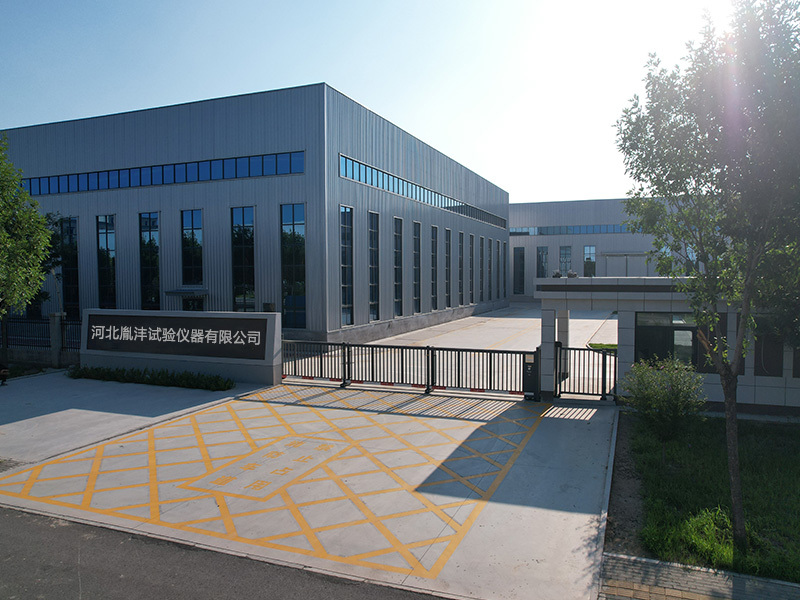
Hebei Yinfeng Experimental Instrument Co., Ltd. is a high-tech enterprise dedicated to the research and development, production, and sales of experimental instruments. The company is headquartered in Hebei Province, relying on the strong industrial foundation and technological innovation resources in the Beijing Tianjin Hebei region. It is committed to providing high-precision and high reliability testing equipment and solutions for material testing, engineering quality control, scientific research experiments and other fields.



Customized Delivery Process
We provide customers with full-process services ranging from pre-sale consultation, customized solution design, equipment installation and commissioning to after-sale technical support.
Online Communication
Provide Custom Drawings
Merchant Quotation
Sign A Contract
Processing And Production
Packaging And Distribution
Confirm Receipt Of Goods
Successful Transaction
Previous:
Next:
Automatic rock cutter
If you need customized products, Contact US !
Share to


Category
Tag list
Request a Quote
We will contact you within one working day. Please pay attention to your email.
Related Products
Content update in progress
Message
We will contact you within one business day. Please note your email address.
Fast navigation
Contact Us
Whatsapp/Tel: +86-15931715356,+86 16631790555
E-mail: qcj@cnhblabequipment.com
Add: Chengnan Industrial Zone, Xian County, Cangzhou City, Hebei Province

Online Message