



- Product Describe
-
The rapid cement curing box is used in cement plants, construction research institutions, and construction companies to perform rapid, constant-temperature curing of all types of cement. It can predict the compressive and flexural strength test results for 3‑day, 7‑day, and 23‑day strengths within 24 hours (users can set the predicted strength age according to their specific needs), thereby shortening the cement testing cycle.
Technical Parameters of the Cement Rapid Curing Box
1. Temperature control range: 10–100°C
2. Timing range: 0.5–24 hours
3. U-shaped electric heating tube: 1000W / 220V
4. Water heating: 100°C in 2 hours
5. Three sets of cement test molds can be placed inside the stainless steel box.Operating Procedures for Cement Rapid Curing Cabinets
1. After the cement rapid curing chamber is placed stably, first check whether any electrical components are damaged and whether the wiring is in good contact. Then securely plug in the sensor and heater connectors. The equipment must be reliably grounded.
2. After unpacking, add water to a height of approximately 60 mm. Once the test specimens are molded, store them at room temperature for 7 hours or under standard curing conditions for 3 hours. When approaching final set (note that the exact time will vary depending on the cement composition—please monitor closely), place the specimens together with their molds onto the shelves inside the curing chamber.
3. Close the lid of the rapid cement curing box, insert the temperature sensor, and set the temperature and working time according to the different cement compositions of each plant.
4. Once the test is completed, remove the mold and place it in a room at normal temperature. When the test specimen has returned to room temperature, disassemble the mold, take out the specimen, and you can then proceed with the flexural and compressive strength tests.
5. After the test is completed, drain the water and dry the inner chamber.
6. Depending on the type of cement, the test can be conducted at a constant temperature ranging from 65 to 80°C. Perform 10–20 standard versus rapid comparison tests to determine the ratio or difference, and then derive the standard test results (and accordingly identify the appropriate test temperature).
7. Cement rapid curing box temperature setting:
Simply set the knob—when the white scale points to the desired temperature.
8. Cement rapid curing box time setting:
After powering on, the 4-digit digital display shows “00:00”. Press the “Set/Query” button; at this point, the currently set digit will begin to flash. Use the “Add” button to enter a value, and press the “Shift” key to set the next digit (from left to right). Once the time has been set, turn the power switch on again—then the device will start operating, counting down from 0. When the preset time is reached, you can remove the test specimen.Structure
The cabinet consists of inner and outer shells and a thermal insulation layer. Both the inner and outer shells are fabricated by welding high‑quality stainless steel. A high‑quality insulation layer is filled between the inner and outer layers. A water seal is used to ensure a tight seal between the cabinet body and the cabinet lid.
1. Lid 2. Outer Box 3. Shelf 4. Heating Tube 5. Drain Valve 6. Insulation Layer 7. Temperature Sensor 8. ControllerHow to Use
1. After the enclosure is placed stably, first check whether any components in the electrical section are damaged and whether the wiring is making good contact. Then securely plug in the sensor and heater connectors. The equipment must be reliably grounded.
2. After unpacking, add water to a height of approximately 60 mm. Once the test specimens are molded, store them at room temperature for 7 hours or under standard curing conditions for 3 hours. When approaching final set (note that the exact time will vary depending on the cement composition—please monitor closely), place the specimens together with their molds onto the shelves inside the curing chamber.
3. Close the box lid securely and insert the temperature sensor. Depending on the different cement compositions of each plant, set the appropriate temperature and operating time.
4. Once the test is completed, remove the mold and place it in a room at normal temperature. When the test specimen has returned to room temperature, disassemble the mold, take out the specimen, and proceed with the flexural and compressive strength tests.
5. After the test is completed, drain the water and dry the inner chamber.
6. Depending on the type of cement, the test can be conducted at a constant temperature between 65–80°C. Perform 10–20 standard versus rapid comparison tests to determine the ratio or difference, and then derive the standard test results (and accordingly identify the appropriate test temperature).
Company Profile
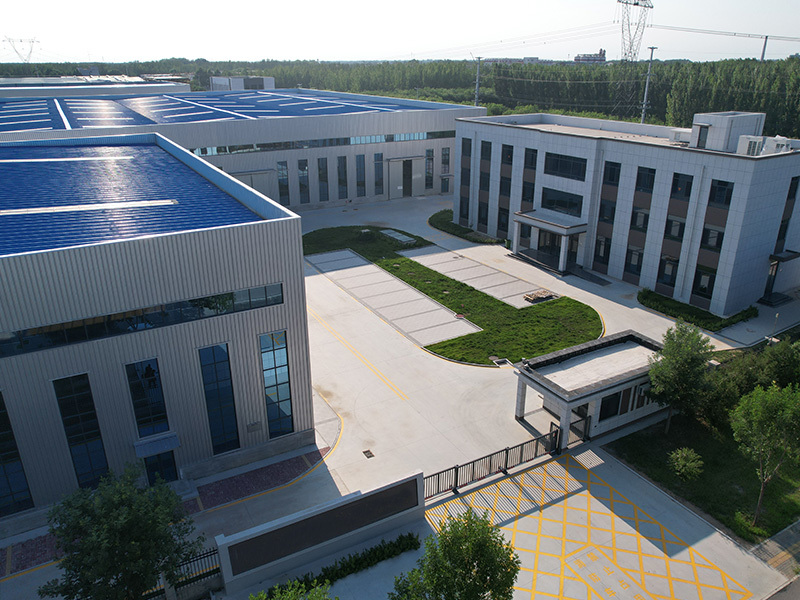
Hebei Yinfeng Experimental Instrument Co., Ltd. is a high-tech enterprise dedicated to the research and development, production, and sales of experimental instruments. The company is headquartered in Hebei Province, relying on the strong industrial foundation and technological innovation resources in the Beijing Tianjin Hebei region. It is committed to providing high-precision and high reliability testing equipment and solutions for material testing, engineering quality control, scientific research experiments and other fields.



Customized Delivery Process
We provide customers with full-process services ranging from pre-sale consultation, customized solution design, equipment installation and commissioning to after-sale technical support.
Online Communication
Provide Custom Drawings
Merchant Quotation
Sign A Contract
Processing And Production
Packaging And Distribution
Confirm Receipt Of Goods
Successful Transaction
Previous:
Next:
Cement Rapid Curing Box
If you need customized products, Contact US !
Share to


Category
Tag list
Request a Quote
We will contact you within one working day. Please pay attention to your email.
Related Products
Content update in progress
Message
We will contact you within one business day. Please note your email address.
Fast navigation
Contact Us
Whatsapp/Tel: +86-15931715356,+86 16631790555
E-mail: qcj@cnhblabequipment.com
Add: Chengnan Industrial Zone, Xian County, Cangzhou City, Hebei Province

Online Message