



- Product Describe
-
Applicable Standards
The SYD-3536(A) asphalt flash and fire point tester is designed and manufactured in accordance with the national standard GB/T 3536-2000, “Test Methods for Flash and Fire Points of Petroleum Products (Cleveland Open Cup Method).”
This instrument is also suitable for the JTG E20–2011 Highway Specifications T0611–2011 “Test for Flash Point and Fire Point of Asphalt (Cleveland Open Cup Method)” and the international standard ISTMD 2000 test.
Uses and Scope of Application
This instrument is suitable for determining the flash point and fire point of viscous petroleum asphalt, coal tar asphalt, and liquid petroleum asphalt materials with a flash point above 79°C using the Cleveland Open Cup (COC) method, for the purpose of assessing construction safety.
Operating conditions of the instrument
Power supply: AC 220 V ±10% / 50 Hz
Ambient temperature: -10°C to 50°C
Relative humidity: ≤85%
Higher power: 800W
Main Features and Technical Parameters
Model SYD-3536:
1. Automatic sweeping and ignition;
2. Electric furnace heating power is continuously adjustable from 0 to 800 W;
3. The heating element is protected by a transparent quartz tube, eliminating open flames, ensuring explosion-proof operation, and enabling rapid temperature rise;
Model SYD-3536A:
1. Automatic sweeping and ignition;
2. Electric furnace heating power is continuously adjustable from 0 to 800 W (with digital PWM control);
3. The heating element is protected by a transparent quartz tube, eliminating open flames, ensuring explosion-proof operation, and enabling rapid temperature rise;
4. Chinese graphical LCD display with digital temperature readout (using a low-thermal-resistance PT100 temperature sensor).
5. Features an advanced digital temperature control algorithm that enables automatic and rapid adjustment of the heating rate.
6. The flash point and fire point temperatures can be automatically recorded by pressing a button.
Main Structure and Principle Block Diagram
1. The structure is shown in the figure.

Figure 1 SYD-3536

Figure 2 SYD-3536A
2. Operating Method

The figure shows a schematic diagram of the SYD-3536A panel.
Heating: Used to turn the heating function on or off.
Ignition: Used to start or stop the sweeper.
Flash Point Record/Fire Point Record: Press the button when the corresponding phenomenon is observed to record the corresponding temperature value.
Settings/Direction Keys: Used to open the settings interface and modify parameters, including control parameters for adjusting the heating rate, among others.
Heating adjustment knob: provides coarse control over the heating rate.
Installation and Usage Steps
1. Open the packaging box and inspect the instrument’s exterior and associated accessories. If no damage or missing parts are found, proceed with installation according to the structural diagram.
2. Verify that the power supply is properly grounded.
3. Turn on the power switch; the indicator light will illuminate, after which you may proceed with the test operation.
4. Wash and dry the sample cup with solvent, then mount it on the stand.
5. Install the thermometer by inserting it vertically into the test cup, with the mercury bulb (temperature sensor) positioned approximately 6.5 mm above the bottom of the cup and 16 mm from the cup edge on the side opposite the igniter.
6. After preparing the test sample, pour it into the sample cup up to the marked line, ensuring that no asphalt adheres to any other part of the cup. (Note: The heating temperature of the sample must not exceed 55°C below the flash point.)
7. The entire apparatus shall be placed in an indoor location with subdued lighting and no significant air circulation, and shall be enclosed on three sides by windbreak screens.
8. Connect the igniter to the pressurized container of flammable gas (such as liquefied propane or natural gas) using a flexible hose; turn the igniter to one side, perform the ignition test, and adjust the flame until it forms a standard spherical shape or a small spherical pilot flame with a diameter of 4 mm ± 0.8 mm.
Test Procedure (General)
1. Begin the heating test, rapidly increasing the heating rate to 14°C/min to 17°C/min. When the sample temperature reaches 56°C below the expected flash point, adjust the heater to reduce the heating rate, so that 28°C before the expected flash point the heating rate is maintained at 5.5°C/min ± 0.5°C/min.
2. Begin when the sample temperature reaches 28°C below the expected flash point; thereafter, press the igniter button every 2°C to cause the igniter’s pilot flame to sweep horizontally in an arc with a radius of 150 mm across the center of the test cup opening, taking approximately 1 second to traverse from one side of the cup opening to the other. At this point, verify that the igniter’s pilot flame is a spherical flame with a diameter of 4 mm ± 0.8 mm and is positioned 2.5 mm above the cup opening. (Note: During the test, do not breathe directly over the sample cup.)
3. When a brief, instantly extinguishing blue flame first appears on the surface of the test sample, immediately read and record the temperature from the thermometer (display screen) as the flash point of the sample. Note that the bluish-white flame surrounding the test flame should not be mistaken for the flash point flame. Press the “Flash Point Record” key, and the instrument will automatically record the current temperature (SYD-3536A).
4. Continue heating, maintaining a sample heating rate of 5.5°C/min ± 0.5°C/min, and perform the ignition test using the igniter in accordance with the aforementioned operating requirements.
5. When the test specimen ignites immediately upon contact with the flame and continues to burn for at least 5 seconds, stop heating and record the temperature indicated on the thermometer as the flash point of the specimen. Press the “Flash Point Record” key, and the instrument will automatically log the current temperature (SYD-3536A).
6. For the same test sample, at least two parallel tests shall be conducted. When the difference between the two measurement results does not exceed the allowable repeatability limit of 8°C, the integer value of their average shall be taken as the test result.
7. Precision or permissible deviation
The permissible differences for repeatability tests are: flash point, 8°C; fire point, 8°C.
The permissible difference for the reproducibility test is: flash point, 16°C; fire point, 14°C.
8. After the test is completed, perform thorough cleaning and disconnect the power supply.
Company Profile
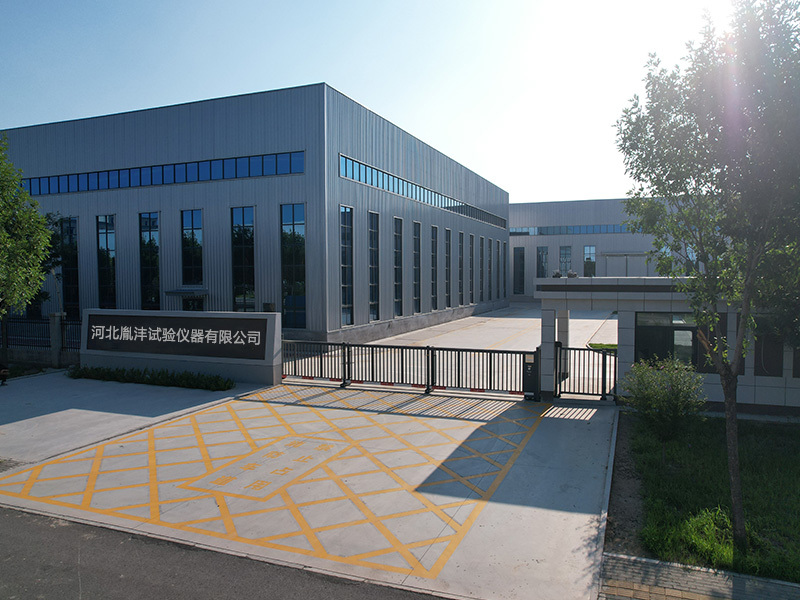
Hebei Yinfeng Experimental Instrument Co., Ltd. is a high-tech enterprise dedicated to the research and development, production, and sales of experimental instruments. The company is headquartered in Hebei Province, relying on the strong industrial foundation and technological innovation resources in the Beijing Tianjin Hebei region. It is committed to providing high-precision and high reliability testing equipment and solutions for material testing, engineering quality control, scientific research experiments and other fields.



Customized Delivery Process
We provide customers with full-process services ranging from pre-sale consultation, customized solution design, equipment installation and commissioning to after-sale technical support.
Online Communication
Provide Custom Drawings
Merchant Quotation
Sign A Contract
Processing And Production
Packaging And Distribution
Confirm Receipt Of Goods
Successful Transaction
Previous:
Cleveland Open-Cup Flash Point Tester
If you need customized products, Contact US !
Share to


Category
Tag list
Request a Quote
We will contact you within one working day. Please pay attention to your email.
Related Products
Content update in progress
Message
We will contact you within one business day. Please note your email address.
Fast navigation
Contact Us
Whatsapp/Tel: +86-15931715356,+86 16631790555
E-mail: qcj@cnhblabequipment.com
Add: Chengnan Industrial Zone, Xian County, Cangzhou City, Hebei Province

Online Message