



- Product Describe
-
Hard Foam Water Absorption Slicer
I. Introduction
The hard foam specimen slicer is an integral part of the water absorption test for rigid foam plastics. The main components of the hard foam specimen slicer include a sample-holding groove, a sample-thickness adjuster, and sample-clamping screws. The function of the sample-placement adjuster is to hold the sample in place and to adjust the thickness of the sample slices.
III. Specific Parameters
1. Minimum slice thickness of the slicer: 0.1–0.4 mm;
2. Specimen dimensions: 50*50*100mm;
3. External dimensions: 120*120*140mm
4. Effective stroke: 25 mm
IV. Instructions for Use
1. Adjust the specimen thickness regulator to the 25mm mark, loosen the sample clamping screw, place a specimen measuring 50×50mm into the mounting slot, and then tighten the sample clamping screw to securely clamp the specimen.
2. Use a slicing knife to trim away any excess sample along the surface of the slicer platform. To ensure that the top surface of the sample is smooth, adjust the slice thickness regulator to 0.3 mm and use the slicing knife to trim the sample flush with the edges.
3. Adjust the slice thickness regulator to obtain the desired slice thickness (turning clockwise advances the technical sample, while turning counterclockwise returns the sample to the sample-holding slot). However, you should add the thickness of the blade itself. The blade thickness is approximately 0.15–0.2 mm. For example, when cutting a 0.1-mm-thick slice, you should turn the regulator out by about 0.3 mm before using the microtome to cut the slice.
V. Inspection Instructions
1. Factory inspection: refers to the certificate of conformity provided by the manufacturer.
Company Profile
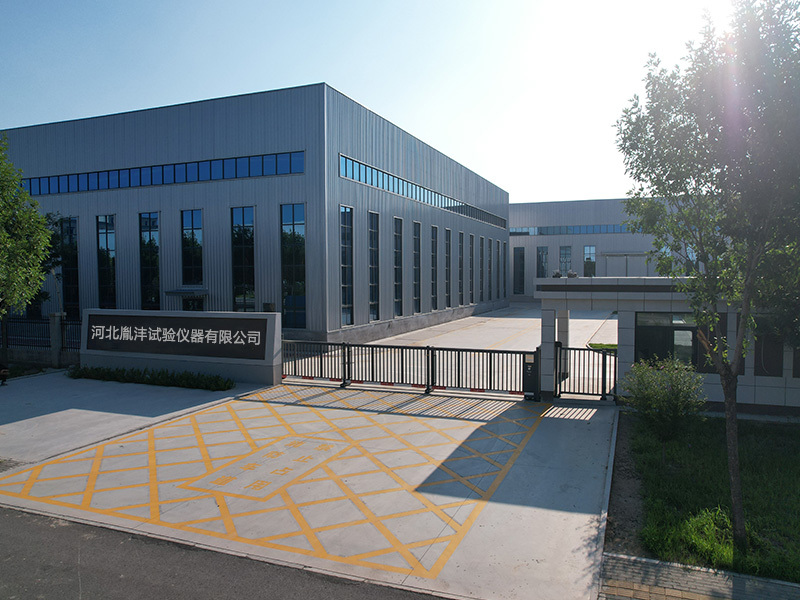
Hebei Yinfeng Experimental Instrument Co., Ltd. is a high-tech enterprise dedicated to the research and development, production, and sales of experimental instruments. The company is headquartered in Hebei Province, relying on the strong industrial foundation and technological innovation resources in the Beijing Tianjin Hebei region. It is committed to providing high-precision and high reliability testing equipment and solutions for material testing, engineering quality control, scientific research experiments and other fields.



Customized Delivery Process
We provide customers with full-process services ranging from pre-sale consultation, customized solution design, equipment installation and commissioning to after-sale technical support.
Online Communication
Provide Custom Drawings
Merchant Quotation
Sign A Contract
Processing And Production
Packaging And Distribution
Confirm Receipt Of Goods
Successful Transaction
Next:
Hard Foam Water Absorption Slicer
If you need customized products, Contact US !
Share to


Category
Tag list
Request a Quote
We will contact you within one working day. Please pay attention to your email.
Related Products
Content update in progress
Message
We will contact you within one business day. Please note your email address.
Fast navigation
Contact Us
Whatsapp/Tel: +86-15931715356,+86 16631790555
E-mail: qcj@cnhblabequipment.com
Add: Chengnan Industrial Zone, Xian County, Cangzhou City, Hebei Province

Online Message