



- Product Describe
-
Uses
The Casagrande liquid limit test involves dividing the soil paste in the test pan into two equal halves using a knife, then dropping the pan from a height of 10 mm at a rate of twice per second. The pan is dropped repeatedly until the soil paste at the bottom of the pan just closes to an appropriate degree, at which point the moisture content of the sample is measured. This product is designed and manufactured in accordance with GB/T 21997.1-2008 and complies with the following standards: SL 237-1999 “Geotechnical Testing Procedures,” JTG E40-2007 “Highway Geotechnical Testing Procedures,” TB10102-2010 “Railway Engineering Geotechnical Testing Procedures,” GB/T 50123-2019 “Standard for Geotechnical Testing Methods,” JTG 3430-2020 “Highway Geotechnical Testing Procedures,” TB10102-2003 “Railway Engineering Geotechnical Testing Procedures,” JTG 3432-2024 “Highway Engineering Aggregate Testing Procedures,” and ASTM D4318 “Standard Test Method for Liquid Limit of Soils.”
Technical Specifications
1. Available in electric drive and manual drive versions.
2. Built-in strike-count timer
3. Disc drop frequency: 120 strokes per minute (allowable tolerance: 15%)
The Casagrande liquid limit test is a method used to determine the liquid limit of soil and involves the following steps:
Prepare the soil sample. Place the soil sample in an evaporating dish, add 15 to 20 milliliters of distilled water, and use a soil-mixing knife to repeatedly stir and knead the sample until it is thoroughly mixed. Thereafter, add 1 to 3 milliliters of water at a time, ensuring thorough mixing each time.
Prepare the soil paste. Mix the soil sample with sufficient water to achieve a specified consistency. After the soil paste has been allowed to fall 25 to 35 times, place it on a dish and use a soil-smoothing knife to press and spread it into a uniform shape, minimizing the number of smoothing strokes to avoid entrapping air bubbles. The thickest part of the soil paste should be 1 cm.
Form a groove. Use a soil-conditioning knife to smooth the surface of the soil paste, then cut the paste along the diameter to create a well-defined groove.
Soil disc rise-and-fall test. Rotate the crank at a rate of 2 revolutions per second to raise and lower the soil disc until the length of contact between the two halves of the soil paste at the bottom of the trough is approximately 1/2 inch (12.7 mm). Record the number of blows required when the length of contact at the bottom of the trough reaches 1/2 inch.
Sampling and weighing: Cut a vertical slice of soil from one side of the petri dish to the other, with a width approximately equal to the width of the soil-cutting blade, including the soil at the closure of the groove. Place the slice in a weighing box, weigh it, and record the weight. Then dry the sample at 230°F ± 9°F (110°C ± 5°C) until constant weight is achieved; after cooling, immediately reweigh the sample and record the loss in weight due to drying as the water weight.
Repeat the experiment. Transfer the remaining soil from the dish into an evaporating dish, add water to increase the soil’s plasticity, and repeat the above steps at least twice to obtain soil samples of different consistencies.
Calculate the liquid limit. Determine the soil moisture content as a percentage of the oven-dry weight of the soil. The liquid limit is defined as the moisture content corresponding to 25 blows on the flow curve.
Plot the plastic flow curve. On semi-logarithmic paper, plot the plastic flow curve to show the relationship between water content and the number of drops required for the dish to fall.
By following the above steps, the liquid limit of soil can be determined effectively, thereby enabling soil classification and an understanding of its engineering properties.
Certificate of Product Conformity
Name: Disc Liquid Limit Apparatus
Model: DS-1
Inspector: 03
Date of Manufacture: March 2025
Test Result: Pass; Approved for Shipment
Warranty Statement
Please keep this warranty card in a safe place as proof of service.
The warranty period is 12 months from the date of purchase.
During the warranty period, if the warranted product experiences quality issues or malfunctions under normal use and maintenance, and such issues are verified upon inspection, our company will provide free repair services and replacement of defective parts.
The Company reserves the right to modify and interpret all content.
The following situations are not eligible for free repair.
The product was damaged due to incorrect installation and operation.
Previously modified or altered by personnel not employed by this company.
The product number has been altered or does not match that listed on this certificate.
Damage caused by negligent use or by the ingress of water or other substances into the product.
Company Profile
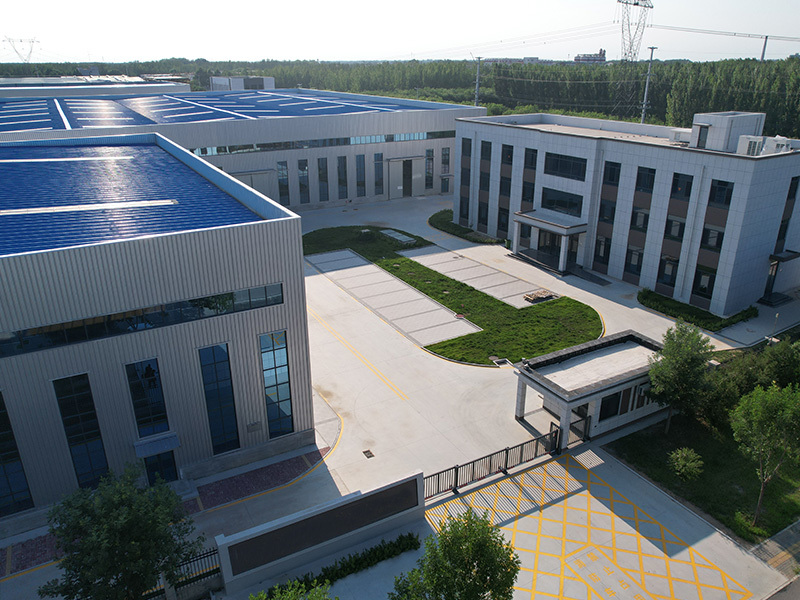
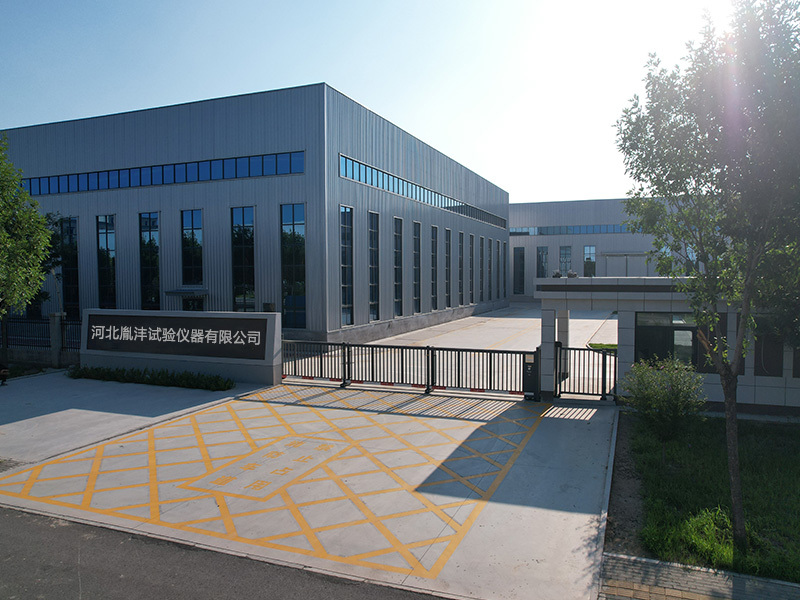
Hebei Yinfeng Experimental Instrument Co., Ltd. is a high-tech enterprise dedicated to the research and development, production, and sales of experimental instruments. The company is headquartered in Hebei Province, relying on the strong industrial foundation and technological innovation resources in the Beijing Tianjin Hebei region. It is committed to providing high-precision and high reliability testing equipment and solutions for material testing, engineering quality control, scientific research experiments and other fields.


Customized Delivery Process
We provide customers with full-process services ranging from pre-sale consultation, customized solution design, equipment installation and commissioning to after-sale technical support.
Online Communication
Provide Custom Drawings
Merchant Quotation
Sign A Contract
Processing And Production
Packaging And Distribution
Confirm Receipt Of Goods
Successful Transaction
Previous:
Disc-type liquid limit device
If you need customized products, Contact US !
Share to


Category
Tag list
Request a Quote
We will contact you within one working day. Please pay attention to your email.
Related Products
Content update in progress
Message
We will contact you within one business day. Please note your email address.
Fast navigation
Contact Us
Whatsapp/Tel: +86-15931715356,+86 16631790555
E-mail: qcj@cnhblabequipment.com
Add: Chengnan Industrial Zone, Xian County, Cangzhou City, Hebei Province

Online Message