



- Product Describe
-
Pipe marking tool, 6–380 mm
Product Overview
This instrument is used for scribing when determining the longitudinal shrinkage rate of thermoplastic plastic pipes; the longitudinal shrinkage rate is an important indicator of the performance quality of plastic pipe products. It reflects the stability of the plastic pipe’s longitudinal plastic deformation under thermal influence. The product is manufactured in accordance with GB/T 6671-2001, “Determination of Longitudinal Shrinkage Rate of Thermoplastic Plastic Pipes.”
Main Technical Parameters
1. Blade roller spacing: 100 mm ± 0.1 mm
2. Applicable pipe diameter: 6–380 mm
3. Net weight: 7 kg
4. External dimensions: 30 × 36 × 54 cmHow to use
1. Adjust the column height and tool holder height according to the diameter of the test specimen, and then position the test…
Place the item under two rollers (the roller spacing has been pre-adjusted to 100 m ± 0.1).
Press one end against the stop plate and tighten the pressure handle to apply slight pressure to the pipe.
2. Slowly rotate the pipe specimen; after one complete revolution, two closed circular lines with a uniform spacing of 100 mm will be drawn on the specimen surface. If the lines are shallow and unclear, the rotation may be repeated.Precautions
1. Before use, tighten the hand screws on the upright column and the tool holder.
2. When tightening the pressure handle, do not apply excessive force.Packing List
Host: 1 unit
Instruction manual and certificate of conformity: 1 copyPipe marking tool, 200 mm
Product Overview
The longitudinal shrinkage rate is an important performance indicator for plastic pipe products. It reflects the stability of the pipe’s longitudinal plastic deformation under thermal influence. Determining this parameter is crucial for enhancing the product’s resistance to temperature fluctuations, solar radiation, and other heat sources during service, as well as for extending its service life. However, due to the variety of methods used to measure longitudinal shrinkage, improper operation or failure to observe key procedural requirements during testing often compromises the accuracy of the results.
Technical Specifications
1. The product is tested for longitudinal shrinkage according to GBT 6671-2001, “Determination of Longitudinal Shrinkage of Thermoplastic Pipes.”
2. Blade wheel spacing: 100 mm ± 0.1 mm
3. Blade thickness: 0.2 mm
4. Specimen diameter: 0–200 mmHow to use
Place the standard test specimen to be marked in the central position between the two rollers, and adjust the distance between the two marking rollers to 100 mm (this has already been set at the factory). Ensure that one of the marking rollers is 10 mm from one end of the pipe. Then rotate the specimen to draw two closed circumferential lines on its surface, spaced 100 mm apart (this length corresponds to the initial gauge mark spacing L0 before testing). Subsequently, place the pre-treated specimen in an oven, heat it to the temperature specified by the standard, allow it to cool, and measure the gauge mark spacing L on the pipe.
Processing of Test Results for Pipe Marking Devices
Longitudinal shrinkage rate T = |L0 - L| / L0 × 100
Instructions: For each test specimen, we mark two circumferential lines 100 mm apart, ensuring that one of the lines is at least 10 mm from either end of the specimen. After marking, we measure the distance again and use this measurement as the initial gauge length. Set the oven to the required temperature of 150°C; once the oven has reached the specified temperature, place the prepared specimens inside. Measure the distance once more and use this value as the initial gauge length. Set the oven to the required temperature of 150°C; once the oven has reached the specified temperature, place the prepared specimens inside. It is important to note that, after loading the specimens, the oven must return to the set temperature within 15 minutes. Therefore, do not overload the oven—keep the number of specimens within its capacity—and work quickly enough to prevent the oven temperature from dropping excessively. There are two methods for placing the specimens: first, suspend the specimens inside the oven, with the suspension point located at the far end relative to the gauge marks, ensuring that the specimens do not touch the oven floor or walls; second, lay the specimens flat on a tray lined with a layer of talc powder before placing them in the oven. In this experiment, two sets of specimens are suspended in the oven for heating, while the other two sets are laid flat in the oven for heating. Close the oven, and start timing when the oven temperature rises back to 150°C. The heating duration is specified as 60 minutes. After 60 minutes, remove the specimens from the oven: suspend one pair of specimens and lay the other pair flat—one on a smooth wooden surface and the other on a smooth granite surface. Repeat the same procedure for the remaining two pairs. Once the specimens have cooled completely to (23 ± 2)°C, measure the distance between the gauge marks, taking multiple readings and selecting the value that shows the largest change relative to the initial gauge length, then perform the calculation.Pipe marking tool, 400 mm
Product Overview
This instrument is used for scribing when determining the longitudinal shrinkage rate of thermoplastic plastic pipes; the longitudinal shrinkage rate is an important indicator of the performance quality of plastic pipe products. It reflects the stability of the plastic pipe’s longitudinal plastic deformation under thermal influence. The product is manufactured in accordance with GB/T 6671-2001, “Determination of Longitudinal Shrinkage Rate of Thermoplastic Plastic Pipes.”
Main Technical Parameters
1. Blade roller spacing: 100 mm ± 0.1 mm
2. Applicable pipe diameter: 6–400 mm
3. Net weight: 7 kg
4. External dimensions: 30 × 36 × 54 cmHow to use
1. Adjust the column height and tool holder height according to the diameter of the test specimen, and then position the test…
Place the item under two rollers (the roller spacing has been pre-adjusted to 100 m ± 0.1).
Press one end against the stop plate and tighten the pressure handle to apply slight pressure to the pipe.
2. Slowly rotate the pipe specimen; after one complete revolution, two closed circular lines with a uniform spacing of 100 mm will be drawn on the specimen surface. If the lines are shallow and unclear, the rotation may be repeated.Precautions
1. Before use, tighten the hand screws on the upright column and the tool holder.
2. When tightening the pressure handle, do not apply excessive force.Packing List
Host: 1 unit
Instruction manual and certificate of conformity: 1 copyPlastic pipes
The longitudinal shrinkage rate is an important performance indicator for plastic pipe products. It reflects the stability of the pipe’s longitudinal plastic deformation under thermal influence. Determining this parameter is crucial for enhancing the product’s resistance to temperature fluctuations, solar radiation, and other heat sources during service, as well as for extending its service life. However, due to the variety of methods used to measure longitudinal shrinkage, improper operation or failure to observe key procedural requirements during testing often compromises the accuracy of the results.
Scope of Application
The product is manufactured in accordance with GBT 6671-2001, “Determination of Longitudinal Shrinkage of Thermoplastic Pipes,” and is suitable for determining the longitudinal shrinkage of plastic pipes.
Technical Specifications
Blade thickness: 2 mm
Blade roller spacing: 100 mm ± 0.1 mm
Net weight: 9 kg
Gross weight: 12 kg
External dimensions: 420×360×300 mmHow to use
1. Carefully lift the rollers, place the standard test specimen to be marked under the two rollers (with the roller spacing pre-adjusted to 100 mm ± 0.1), abut one end against the stop plate, then lower the rollers and gently press down on the center of the two rollers with your hand.
2. Slowly rotate the pipe specimen; after one complete revolution, two closed circular lines spaced 100 mm apart will be drawn on the specimen surface. If the lines appear shallow or unclear, repeat the rotation for another full revolution.
3. At (23 ± 2)°C, the distance between the calibration marks, L0, was measured with an accuracy of 0.25 mm.
4. Adjust the oven temperature to the specified value TR as given in Appendix A. (See Standard GBT 6671-2001, “Determination of Longitudinal Shrinkage of Thermoplastic Pipes,” for Appendix A.)
5. Place the test specimen in the oven, ensuring that it does not come into contact with the bottom or walls of the oven. If the specimen is suspended, the suspension point should be located at the end farther from the reference mark. If the specimen is placed flat, it should be positioned on a flat plate lined with a layer of talc powder; for sectioned specimens, the convex surface should be facing downward.
6. Place the test specimen in the oven and maintain it at the temperature specified in Appendix A for the duration stated therein, with the timing commencing when the oven temperature has回升 to the specified temperature.
7. Remove the test specimen from the oven and place it flat on a smooth, level surface. Once the specimen has cooled completely to (23 ± 2)°C, measure the larger or smaller distance Li between the marked lines along the generatrix on the specimen’s surface, accurate to 0.25 mm.
Note: For sliced specimens, the four slices cut from each pipe section shall be treated as a single specimen for Li measurement, and during measurement, the influence of the cut edge shall be avoided.
Processing of test results for the plastic pipe marking device:
(Note: The longitudinal shrinkage ratio RLi of each test specimen is expressed as a percentage.)
RLi = △L / L0 × 100
In the formula: △L = |L0 − Li|
L0 —— The distance between the two reference marks on the specimen before it is placed in the oven (unit: mm).
Li —— the distance between the two reference lines measured along the busbar after the test (unit: mm).
Choosing Li results in a larger value for △L.
Calculate the arithmetic mean of the three test specimens’ RLi values; this result shall be taken as the longitudinal shrinkage ratio RL of the pipe material.
Precautions for Using a Plastic Pipe Scribing Tool
Once the test specimen has completely cooled to (23 ± 2)°C, measure the larger or smaller distance between the gauge marks. Multiple measurements should be taken, and the value corresponding to the greater change relative to the original gauge length should be selected for subsequent calculation.
Company Profile
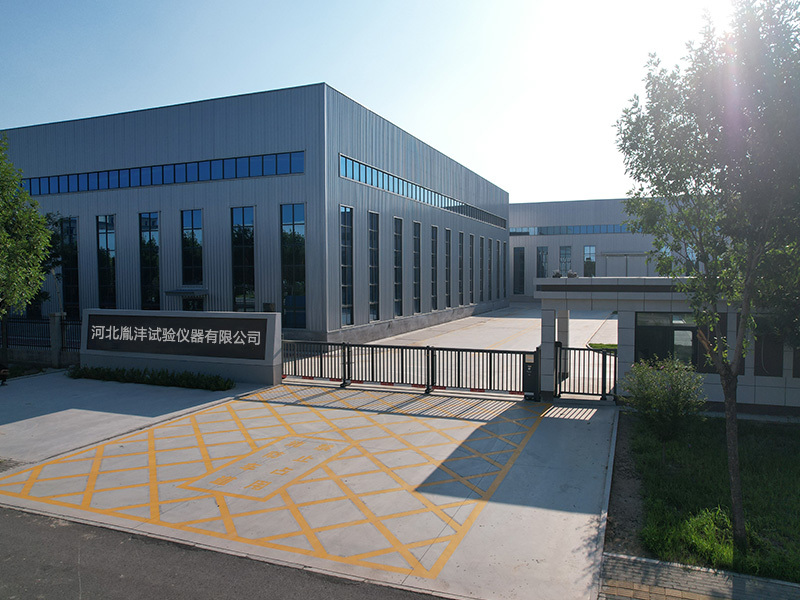
Hebei Yinfeng Experimental Instrument Co., Ltd. is a high-tech enterprise dedicated to the research and development, production, and sales of experimental instruments. The company is headquartered in Hebei Province, relying on the strong industrial foundation and technological innovation resources in the Beijing Tianjin Hebei region. It is committed to providing high-precision and high reliability testing equipment and solutions for material testing, engineering quality control, scientific research experiments and other fields.



Customized Delivery Process
We provide customers with full-process services ranging from pre-sale consultation, customized solution design, equipment installation and commissioning to after-sale technical support.
Online Communication
Provide Custom Drawings
Merchant Quotation
Sign A Contract
Processing And Production
Packaging And Distribution
Confirm Receipt Of Goods
Successful Transaction
Previous:
Next:
Pipe marking tool
If you need customized products, Contact US !
Share to


Category
Tag list
Request a Quote
We will contact you within one working day. Please pay attention to your email.
Related Products
Content update in progress
Message
We will contact you within one business day. Please note your email address.
Fast navigation
Contact Us
Whatsapp/Tel: +86-15931715356,+86 16631790555
E-mail: qcj@cnhblabequipment.com
Add: Chengnan Industrial Zone, Xian County, Cangzhou City, Hebei Province

Online Message