



- Product Describe
-
Introduction to the Water‑Cement Ratio Tester
The water‑to‑cement ratio tester is used on concrete placement sites to provide comprehensive management of concrete mix proportions prior to formwork placement. Using a 7L, approximately 15 kg, test sample, the test takes only 5 minutes. By weighing the sample and measuring its air content, the measured values are wirelessly transmitted to a computer, where they are processed by testing software and displayed directly on the computer screen as five key indicators representing the fundamental properties of concrete: air content, unit volume mass, unit water consumption, unit cementitious material usage, and the water‑to‑cement (or cementitious material) ratio. This testing method yields measurement errors that are so small they can often be disregarded, accurately reflecting the true condition of the concrete.
Scope of Application for Water‑Cement Ratio Meters
The water‑to‑cement ratio tester is suitable for the rapid determination of the water‑to‑cement ratio W/C in fresh concrete.
Determine the cement content C in concrete per unit volume (in grams per liter or kilograms per cubic meter).
Measure the fineness of cement as the percentage d% passing through a 0.08 mm sieve.
It should have the capacity to measure the apparent specific gravity of cement, sand, and gravel.
Structural Performance of the Water‑Cement Ratio Tester
The water‑to‑cement ratio tester consists of a support frame, a water discharge valve, a mixing bucket, mixing blades, a water sifter, and a water‑drilling frame, among other components.
This concrete mixing instrument is a manual mechanical device that is simple to operate and requires no external power. It effectively screens and washes cement from concrete. 3. The water‑to‑cement ratio tester is lightweight, easy to carry, and simple to clean after use.
This instrument should be able to rapidly determine the water‑to‑cement ratio of fresh concrete, enabling timely control of concrete curing and preventing weight-related accidents.
This instrument exhibits good reproducibility in testing and experimentation.
Operating Procedures for the Water‑to‑Cement Ratio Tester
Using a standard plastic 1000 cm³ measuring cup, measure out 2000 cm³ of clean water and pour it into the plastic basin.
Measure 1000 cm³ of concrete mix using a standard plastic liter measure, and weigh it to determine the density in grams per liter.
Determine the slump S.E. value of fresh mixed soil using conventional methods, or use a T‑shaped penetrometer to quickly measure the slump T value and estimate the unit water content.
Company Profile
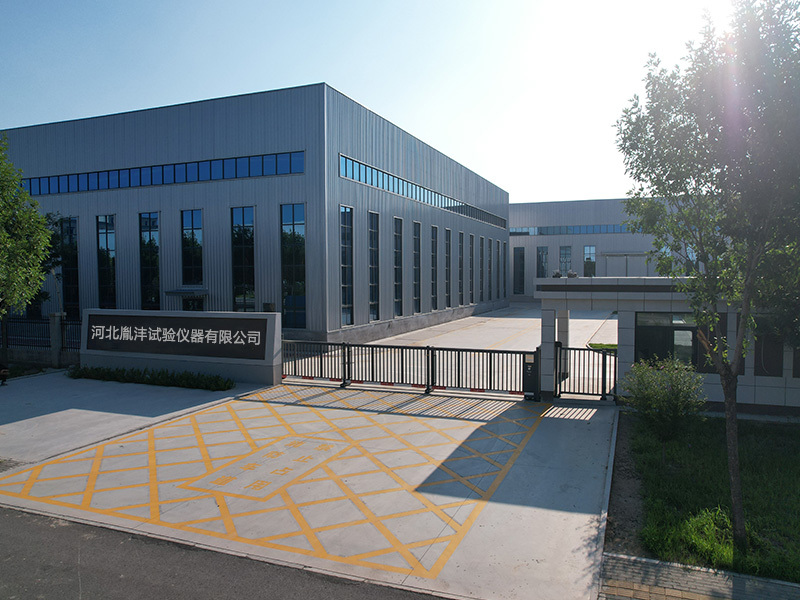
Hebei Yinfeng Experimental Instrument Co., Ltd. is a high-tech enterprise dedicated to the research and development, production, and sales of experimental instruments. The company is headquartered in Hebei Province, relying on the strong industrial foundation and technological innovation resources in the Beijing Tianjin Hebei region. It is committed to providing high-precision and high reliability testing equipment and solutions for material testing, engineering quality control, scientific research experiments and other fields.



Customized Delivery Process
We provide customers with full-process services ranging from pre-sale consultation, customized solution design, equipment installation and commissioning to after-sale technical support.
Online Communication
Provide Custom Drawings
Merchant Quotation
Sign A Contract
Processing And Production
Packaging And Distribution
Confirm Receipt Of Goods
Successful Transaction
Previous:
HKY-1 Concrete Water‑Cement Ratio Rapid Tester
If you need customized products, Contact US !
Share to


Category
Tag list
Request a Quote
We will contact you within one working day. Please pay attention to your email.
Related Products
Content update in progress
Message
We will contact you within one business day. Please note your email address.
Fast navigation
Contact Us
Whatsapp/Tel: +86-15931715356,+86 16631790555
E-mail: qcj@cnhblabequipment.com
Add: Chengnan Industrial Zone, Xian County, Cangzhou City, Hebei Province

Online Message