



- Product Describe
-
Uses and Scope of Application
The cement paste mixer blends cement and water according to standard specifications to produce a uniformly mixed test paste, which is used for determining cement standard consistency, setting time, and preparing soundness test specimens. It is an indispensable piece of equipment for production plants, construction contractors, relevant colleges and universities, and research institutions’ laboratories. This instrument is designed and manufactured in accordance with the national standard JC/T729–2005 and is suitable for the testing methods outlined in GB/T1346–2001 for cement standard consistency water requirement, setting time, and soundness.
Main Technical Parameters
When the agitator blades are in operation, they rotate on their own axis while simultaneously revolving around the perimeter of the pot; the rotation direction is clockwise for self‑rotation and counterclockwise for revolution.
Agitator blade speed and duration:
Agitator blade speed
Speed gear
Rotational speed (r/min) Revolution per minute (r/min) Duration of an automatic control program (s) Slow 140±5 62±5 120±3 Stop 15±1 Quick! 285±10 125±10 120±3 Agitator blade width 111mm Threaded connection between the agitator blade and the blade shaft M16×1 Inner diameter of mixing pot × Maximum depth 160×139mm Stirring pot wall thickness 1mm Working clearance between the mixing blades and the mixing bowl 2±1mm Voltage 3-phase, 3-wire, 380V/50Hz Electric motor Fractional horsepower, two-speed; power 0.55/0.37 kW, 8/4P External dimensions 472×280×466mm Net weight 45kg Main Structure and Operating Principle
Structure: It mainly consists of a base, upright posts, a reduction gearbox, dovetail plates, stirring blades, a mixing pot, and a dual-speed motor. (See the main machine structure diagram.)
Operating Principle: The shaft of the two-speed motor is connected to the worm gear shaft inside the reduction gearbox via a coupling flange. The worm gear reduces the speed, causing the worm gear shaft to drive the planetary positioning sleeve to rotate in synchronization. The blade shaft, fixed eccentrically on the planetary positioning sleeve, drives the blades to revolve around their axis. The planetary gears mounted at the upper end of the blade shaft complete their own rotation around the stationary internal gear ring. The two-speed motor, controlled by a programmable controller, automatically executes the prescribed work cycle of slow–stop–fast rotation. The mixing pot is securely locked in place by rotating positioning screws on the dovetail plate.
Lifting and Installation
This machine is not equipped with a lifting device; it can be moved manually.
No special foundation or anchor bolts are required for installing this machine; simply place the equipment on a level cement platform and pad it with a rubber sheet 5–8 mm thick.
Operation and Use
Moving the handle causes the dovetail plate to drive the guide rails on the stirrer pot’s upright column to move up and down. Once it reaches the upper position, simply tighten the positioning screw to start stirring; to remove the stirrer pot, perform the reverse operation. Insert the programmable controller plug into the “Control Input” socket on the panel, then turn on the power—when the digital display lights up, it indicates that power has been connected, and the programmable controller’s digital display will show 0. This machine offers both manual and automatic electrical operation modes, which users can select according to their needs.
Automatic: Press the “Mode” button; the automatic indicator light will illuminate, indicating that the device is in automatic mode. Press the “Start” button on the programmable controller to automatically complete one test cycle and then stop automatically, with the corresponding indicator lights flashing in sequence. After one automatic program has been completed, pressing the “Start” button again will initiate the next automatic program. Once the test is finished, move the handle to lower the mixing bowl, then turn the mixing bowl counterclockwise to the loose‑position release, and remove the mixing bowl.
Manual: Press the “Mode” button; the manual indicator light will illuminate, indicating that the system is in manual mode. According to experimental requirements, select the function buttons and manually start the timing.
“Mode” button: Used to switch between manual and automatic modes.
“Speed” button: Used to switch between high and low speeds for the stirring blade.
“Start” button: Start the test.
“Pause” Button: During operation, if you need to stop the machine mid‑run, simply press this button. Pressing the button again will resume the test state as it was before pausing.
“Stop” button: End the current test.
Adjustment and Maintenance
Adjustment: Before leaving the factory, the working clearance between the mixing blade and the mixing bowl has been set to 2 ± 1 mm. If adjustment is necessary after a trial run or during maintenance, the procedure is as follows:
If the working clearance between the mixing blades and the mixing bowl exceeds 2 ± 1 mm, loosen the adjusting nut, rotate the blades, and tighten the adjusting nut again once the adjustment is satisfactory; alternatively, loosen the screws that connect the motor to the upright column and the flange of the gearbox to the motor, then tighten the screws again once the adjustment is satisfactory.Maintenance:
The work area should be kept clean. After each use, thoroughly remove any remaining fresh mortar from both the inside and outside of the mixing blades and mixing bowl, and sweep up any mortar and debris that has spilled or splattered onto the machine. Once dry, cover the machine with its protective guard to prevent dust from settling.
This machine is not equipped with external lubrication ports. The worm gear, gears, bearings, and other moving components within the gearbox should be lubricated with molybdenum disulfide grease once every quarter; when lubricating, the bearing covers can be opened individually. Oil should be regularly dripped onto the surfaces between the dovetail plate and the column guide rails, as well as between all mating moving parts, to provide adequate lubrication. The entire machine should be thoroughly cleaned and re-lubricated once a year.
If metallic impact noise occurs during machine operation, first check whether the clearance between the stirring blade and the mixing bowl is correct.
When replacing the mixing pot or blades with new ones, the clearance should be adjusted according to the methods described above.
When using the mixing pot, handle it with care and avoid dropping or bumping it to prevent deformation.
Electrical insulation should be inspected regularly. At a temperature of 20°C ± 5°C and a relative humidity of 50%–70%, the cold‑state insulation resistance shall be ≥5 MΩ.


An aviation connector is routed from the back of the programmable controller.
Definition of Aviation Connector Wiring:
1, 2, 3-----------Slow-speed motor control
4, 5, 6-----------Fast Motor Control
Note: This 6‑pin connector is wired to the internal actuators of the host unit. Users simply need to connect the aviation connector correctly to the host. It is strongly recommended that users do not modify the internal wiring on their own; if such modifications are necessary, they should be performed by a qualified professional.
The system’s power supply is directly connected to the programmable controller. This system is powered by a 380V three-phase, three-wire supply and does not require a neutral wire. Users must correctly connect the power input cable protruding from the back of the programmable controller to a safe and stable 380V power source. When first starting up and running the system, please pay attention to the rotation direction of the agitator blades; if the direction is incorrect, simply swap the positions of any two of the three phase power lines.
Company Profile
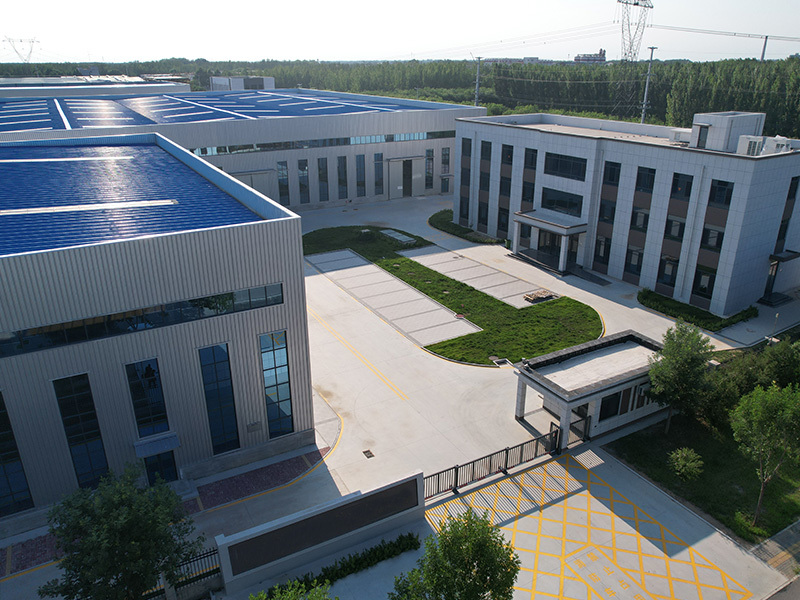
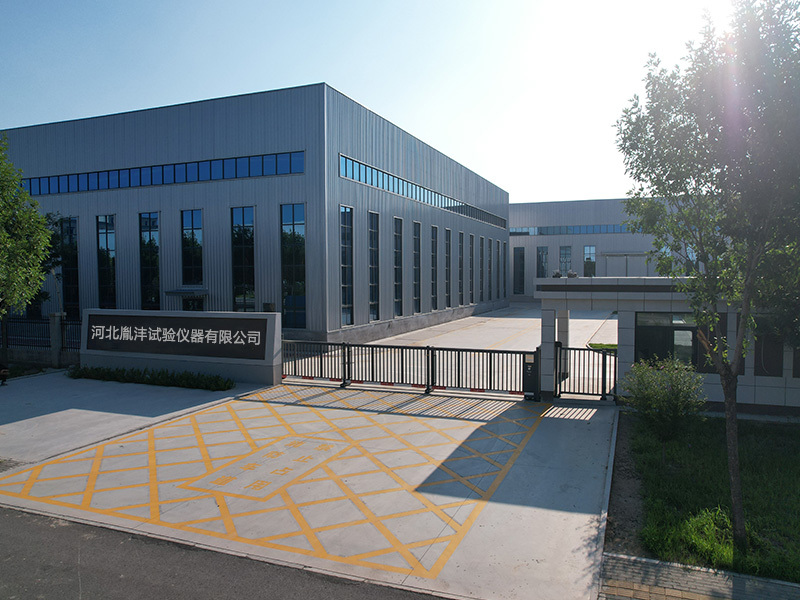
Hebei Yinfeng Experimental Instrument Co., Ltd. is a high-tech enterprise dedicated to the research and development, production, and sales of experimental instruments. The company is headquartered in Hebei Province, relying on the strong industrial foundation and technological innovation resources in the Beijing Tianjin Hebei region. It is committed to providing high-precision and high reliability testing equipment and solutions for material testing, engineering quality control, scientific research experiments and other fields.


Customized Delivery Process
We provide customers with full-process services ranging from pre-sale consultation, customized solution design, equipment installation and commissioning to after-sale technical support.
Online Communication
Provide Custom Drawings
Merchant Quotation
Sign A Contract
Processing And Production
Packaging And Distribution
Confirm Receipt Of Goods
Successful Transaction
Previous:
Cement paste mixer
If you need customized products, Contact US !
Share to


Category
Tag list
Request a Quote
We will contact you within one working day. Please pay attention to your email.
Related Products
Content update in progress
Message
We will contact you within one business day. Please note your email address.
Fast navigation
Contact Us
Whatsapp/Tel: +86-15931715356,+86 16631790555
E-mail: qcj@cnhblabequipment.com
Add: Chengnan Industrial Zone, Xian County, Cangzhou City, Hebei Province

Online Message