



- Product Describe
-
Product Overview
Every object has an inherent resonant frequency. When the object’s volume and material are fixed, its resonant frequency depends solely on its density. Consequently, an object’s natural vibration frequency determines its strength. If the object’s resonant frequency can be measured, its strength can be estimated using strength theory. A dynamic vibrometer is an instrument that measures an object’s resonant frequency based on this principle. It finds wide application in metallurgy, construction, bridge engineering, hydropower, and other fields for measuring the dynamic elastic modulus of concrete, carbon materials, slate, glass, brick, plastics, and metallic materials.
Product Features and Characteristics
The DT-20 dynamic elastic modulus tester offers the following features compared with other products:
1. Manual frequency sensitivity reaches 1 Hz, enabling frequency-hopping sweeps from 100 Hz to 20 kHz—first performing coarse sweeps in tens, hundreds, thousands, or ten-thousands, followed by fine sweeps at the desired resolution until accuracy is refined to 1 Hz.
2. Built-in memory capable of storing data from 100 test runs, with features such as data export and batch printing. 3. Fully Chinese-language LCD display that shows the current sweep frequency, resonance peak frequency, and signal strength in real time, offering advantages over oscilloscope displays from other manufacturers, including intuitive operation, high accuracy, and easy readability.
Product Technical Specifications
1 Frequency measurement range 100 Hz ~ 20 kHz 2 Measurement error <2% 3 Frequency sensitivity 1Hz 4 Output power 0~15W 5 Output method ① All-Chinese LCD display ② Thermal printer printing 6 Environmental conditions 0–50°C, relative humidity <80% 7 Power supply AC 220V, 50Hz, <60W Instrument Structure Description
The vibration analyzer consists of two main components: the host unit and the probe. The probe, in turn, is divided into transmitting and receiving sections. Only with a rational arrangement of these three components can the operation ensure the correct execution of the test. If this is your first time using this product, please read this manual carefully and thoroughly understand the items marked with “Caution” throughout the text to ensure that your test data are accurate and reliable.
- Key Operation Instructions


Company Profile
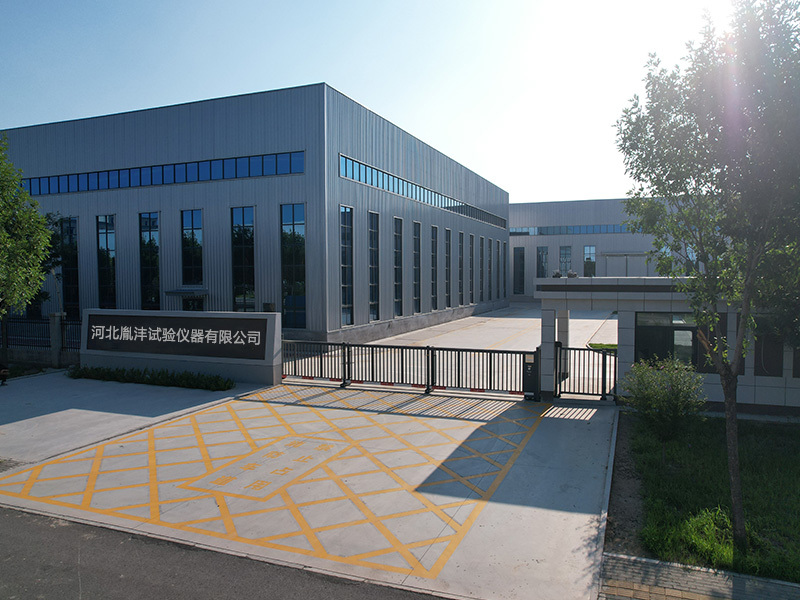
Hebei Yinfeng Experimental Instrument Co., Ltd. is a high-tech enterprise dedicated to the research and development, production, and sales of experimental instruments. The company is headquartered in Hebei Province, relying on the strong industrial foundation and technological innovation resources in the Beijing Tianjin Hebei region. It is committed to providing high-precision and high reliability testing equipment and solutions for material testing, engineering quality control, scientific research experiments and other fields.



Customized Delivery Process
We provide customers with full-process services ranging from pre-sale consultation, customized solution design, equipment installation and commissioning to after-sale technical support.
Online Communication
Provide Custom Drawings
Merchant Quotation
Sign A Contract
Processing And Production
Packaging And Distribution
Confirm Receipt Of Goods
Successful Transaction
Previous:
Concrete impact tester
If you need customized products, Contact US !
Share to


Category
Tag list
Request a Quote
We will contact you within one working day. Please pay attention to your email.
Related Products
Content update in progress
Message
We will contact you within one business day. Please note your email address.
Fast navigation
Contact Us
Whatsapp/Tel: +86-15931715356,+86 16631790555
E-mail: qcj@cnhblabequipment.com
Add: Chengnan Industrial Zone, Xian County, Cangzhou City, Hebei Province

Online Message