



- Product Describe
-
One, The Rock Disintegration Resistance Tester is primarily an experimental instrument used to determine the durability disintegration index of rocks. It can assess the rock’s ability to resist disintegration after repeated cycles of drying and wetting caused by climatic factors. The device operates by using a motor fixed to the base plate, which rotates two drum-shaped specimen containers at a speed of 20 revolutions per minute. The drum-shaped specimen containers are mounted on bearings coated with lubricant, ensuring smooth rotation with minimal resistance. These drum-shaped containers are made from corrosion-resistant materials and are equipped with two water tanks. This equipment is widely applicable in universities, research institutes, testing centers, and other institutions for determining the properties of clayey rocks and weathered rocks.
II. Meets the standards:
DZ/T0276.2-2015, National Standard of the People’s Republic of China for the Geological and Mineral Industry—Experimental Procedures for Physical and Mechanical Properties of Rocks, Part 9: Rock Disintegration Resistance Test.
As stipulated in JTG E41-2005, "Code for Rock Testing of Highway Engineering."
III. Main Parameters of the Rock Disintegration Resistance Tester
1. Host power: 50W
2. Rotational speed: 20 rpm
3. Sieve cylinder: φ140 × 100 mm,
4. Standard sieve aperture: 2 mm
5. Sink volume: 200*170*120mm
6. Specimen specifications: Each specimen weighs 40–60 g, with a total of 10 specimens. Use a grinding disc or sandcloth to polish them into smooth, rounded shapes.
7. Specimen shape: Roughly spherical, with no sharp edges.
8. External dimensions: 900*300*500mm
9. Power supply voltage: 220V
IV. Procedure for the Rock Disintegration Resistance Tester
1. Select the specimen carefully, verify its name and number, and enter the information into the record form.
2. Place the specimen into the cylindrical sieve cylinder of the disintegration resistance tester. Dry it at a temperature of 105–110℃ until its weight stabilizes, then cool it to room temperature in a desiccator and weigh it.
3. Place the cylindrical sieve cylinder containing the specimen into the water tank, and then add pure water to the tank so that the water level is approximately 20 mm below the rotating shaft. After rotating the cylindrical sieve cylinder at 20 r/min for 10 minutes, dry both the cylindrical sieve cylinder and the remaining specimen at a temperature of 105–110℃ until a constant weight is achieved. Then, cool them to room temperature in a desiccator and weigh them.
4. Repeat the procedure described in item 3 of this section to determine the mass of the cylindrical screen cylinder and the remaining test specimen after the second cycle.
Up to five or even more cyclic tests can be conducted as needed.
5. During the test, the water temperature should be maintained within the range of 20 ± 2℃.
6. After the test is completed, describe the residual specimens, the color of the water, and any sediment present in the water. As needed, perform particle size analysis, determination of liquid limit and plastic limit, and clay mineral analysis on the sediment in the water.
7. Weigh accurately to 0.01 g.
V. Calculation of Results from the Rock Disintegration Resistance Test
Calculate the rock disintegration resistance index using the following formula:
Id2 = mr/md %
In the formula: Id2 —— Index of Rock (Secondary Cycle) Disintegration Resistance (%);
md——original sample dried mass (g);
Mr——Dried mass of residual sample (g)
NBJ-II type
Rock Disintegration Test Apparatus
Company Profile
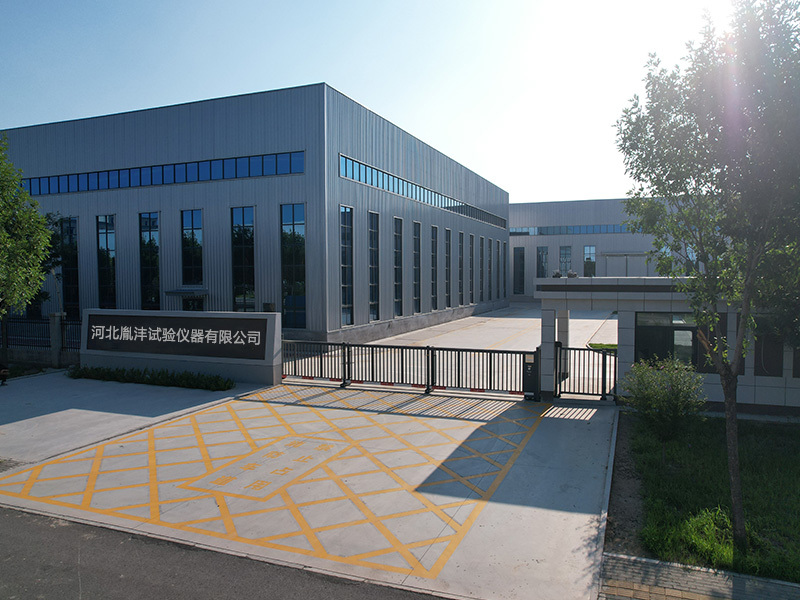
Hebei Yinfeng Experimental Instrument Co., Ltd. is a high-tech enterprise dedicated to the research and development, production, and sales of experimental instruments. The company is headquartered in Hebei Province, relying on the strong industrial foundation and technological innovation resources in the Beijing Tianjin Hebei region. It is committed to providing high-precision and high reliability testing equipment and solutions for material testing, engineering quality control, scientific research experiments and other fields.



Customized Delivery Process
We provide customers with full-process services ranging from pre-sale consultation, customized solution design, equipment installation and commissioning to after-sale technical support.
Online Communication
Provide Custom Drawings
Merchant Quotation
Sign A Contract
Processing And Production
Packaging And Distribution
Confirm Receipt Of Goods
Successful Transaction
Previous:
Rock Disintegration Test Apparatus
If you need customized products, Contact US !
Share to


Category
Tag list
Request a Quote
We will contact you within one working day. Please pay attention to your email.
Related Products
Content update in progress
Message
We will contact you within one business day. Please note your email address.
Fast navigation
Contact Us
Whatsapp/Tel: +86-15931715356,+86 16631790555
E-mail: qcj@cnhblabequipment.com
Add: Chengnan Industrial Zone, Xian County, Cangzhou City, Hebei Province

Online Message