



- Product Describe
-
82/85 Type Asphalt Rotary Thin-Film Oven
The 82/85-type asphalt rotary thin-film oven—the asphalt thin-film oven is not explosion-proof. Any volatile, flammable, and explosive substances must be strictly prohibited from being placed inside the oven for heating to avoid potential hazards.
- Uses and Application Scope:
This product is designed to determine the effects of rotating thin-film oven heating (referred to as RTOT) on viscous asphalt, including the mass loss after heating. It also allows for the measurement, as needed, of changes in properties such as penetration, viscosity, ductility, and brittle point of the asphalt residue remaining after RTOT, thereby assessing the aging performance of asphalt. Developed and manufactured according to TB/T5502—91 “Technical Specifications for Drying Ovens” and standards T0609—93 and T0610—93, the new-generation 82/85-type asphalt rotating thin-film oven is designed and produced in compliance with the national Ministry of Transport’s JTJ052-93 standard and with reference to the relevant standards for rotary thin-film ovens specified in the Japanese JIS standard. This oven is suitable for determining how semi-solid asphalt changes its performance under the influence of heated air. This test method closely simulates the actual conditions encountered during heating and mixing in practical applications, enabling rapid evaluation of asphalt’s resistance to aging. It is an essential instrument for testing polymer-modified asphalt.
II. Technical Performance of the Asphalt Rotary Thin-Film Oven:
Operating environment: 10–40℃
Relative humidity: <85%
III. Main Technical Parameters of the Asphalt Rotary Film Oven:
1. Heating power: 2 kW
2. Operating temperature: 163 ± 1℃ (maximum temperature 200℃)
3. Operating voltage: 220 ±10% V 50 Hz
4. Disc holder rotation speed: 15 ± 0.2 r/min
5. Sample containers: 8 units
Outer diameter: 64.0 mm Height: 139.7 mm Mouth diameter: 31.75 mm
6. Cage-type fan:
Motor power: 120W Speed: 1400 r/min
7. Rotating motor:
Power: 6 W Rotational speed: 15 ± 0.2 r/min
Airflow: 4000 ± 200 ml/min
IV. Packing List
1 main control room for the film drying oven
2 sample bottles, 8 pieces
1 circular metal frame
4 cage fans
5 instruction manuals
6. One qualification certificate
7. 1 copy of the inspection procedure form
Structural description of the asphalt rotary thin-film oven:
1. General arrangement: The main body is made of thin steel plates. The upper half houses a workspace equipped with double doors, while the lower half contains the electrical control section and the mechanical reduction transmission mechanism. The exterior is coated with paint.
2. Observation: The workpiece chamber door is designed in a double-layer configuration, with the inner layer approximately 30 mm thick and the outer layer approximately 50 mm thick. A square glass observation window is installed in the center. The chamber is equipped with an illumination lamp, allowing convenient external monitoring of the chamber’s internal conditions during measurements. A thermometer is inserted from the upper front part of the chamber.
3. Heating: The heating device is located at the bottom of the working chamber and uses natural air convection to heat the air. Air is evenly heated throughout the chamber via air ducts on the top, bottom, and back sides.
4. Thermal Insulation and Temperature Control: Between the working chamber and the outer casing, there is an insulation layer and an air duct. To prevent the temperature inside the working chamber from leaking outward and affecting the stability and sensitivity of temperature control, the insulation layer is filled with glass fiber, while the air duct and the walls of the working chamber are coated with a high-silver powder paint. Temperature control is available in two modes—coarse and fine. By switching between three positions—0, 1/3, 2/3, and 1—via a long toggle switch, the heating power of the electric heating wire can be adjusted to achieve coarse temperature rise and control. Additionally, by adjusting the contacts of the electrical contact thermometer installed at the upper part of the working chamber, the desired operating temperature can be precisely set.
5. Workstation: The workstation features a turntable in the center that can hold four asphalt sample dishes; the turntable is driven by a motor. Alternatively, the turntable can be removed and the unit used as a standard constant-temperature chamber.
Precautions:
1. Start the turntable, and its rotational speed should be controlled at 15 ± 0.2 revolutions per minute.
2. The temperature should be maintained at 163 ± 0.5℃. There may be a slight discrepancy between the digital display on the temperature controller and the reading indicated by the thermometer inside the oven; therefore, the reading from the oven’s thermometer should be taken as the reference. If the reading displayed on the temperature controller does not match the setting on the dial switch, adjust the knob located at the back of the instrument toward either “+” or “–” to bring them into alignment.
3. Regularly check the lubricant level in the gearbox.
Operating Procedures:
1. Turn on the power supply and use heating setting “I” when warming up, then set the temperature controller to the desired temperature. When the desired temperature is reached, switch from heating setting “I” to either “1/3” or “2/3” setting until the thermometer suspended inside the oven indicates a stable temperature of “163 ± 0.5℃”.
2. According to the test method, weigh a specified amount of asphalt sample, place it into a tapered-sample bottle, and then evenly arrange the bottles on the turntable. If fewer than 8 bottles contain samples, empty bottles should also be symmetrically arranged.
3. Start the air compressor to supply air to the oven. After the specified time has elapsed, stop heating, the turntable will come to a halt, and then open the chamber door to remove the bottles.
How to use:
1. Power supply equipment: The power supply circuit should be equipped with an overload protection device dedicated exclusively for this cabinet, and it must also have a reliable grounding system.
2. Leveling Oven: The turntable shall rotate on a horizontal plane, and the angle of inclination relative to the horizontal plane during rotation shall not exceed 3 degrees.
3. Temperature correction.
A. Install the thermometer (with the bulb of the mercury thermometer approximately 6.4 mm above the top surface of the turntable) and calibrate the electrical contact thermometer to the desired temperature of 163℃.
B. Turn off all switches on the distribution panel, plug in the power cord, and then turn on the power switch.
C. Set the three-position switch to position 1. Once the temperature in the entire chamber has risen to the desired level (163℃), check the reading on the working thermometer and adjust the contacts of the electrical contact thermometer to achieve the correct chamber temperature. As a rough estimate, at a constant temperature of 163℃, the power consumption is approximately 1300 watts. At this point, set the three-position switch to the 2/3 position (1600 watts). Under the control of the electrical contact thermometer, allow the entire chamber to maintain a constant temperature for 15 minutes before proceeding with the asphalt film test.
4. Place the sample dish containing the test sample onto the turntable, close the oven, and start the turntable to rotate while maintaining a constant oven temperature of 163℃.
5. During the operation of the box, do not turn on the indoor lighting lights at random, as this may affect the stability of the studio’s temperature.
6. After completion, you must disconnect it.
Company Profile
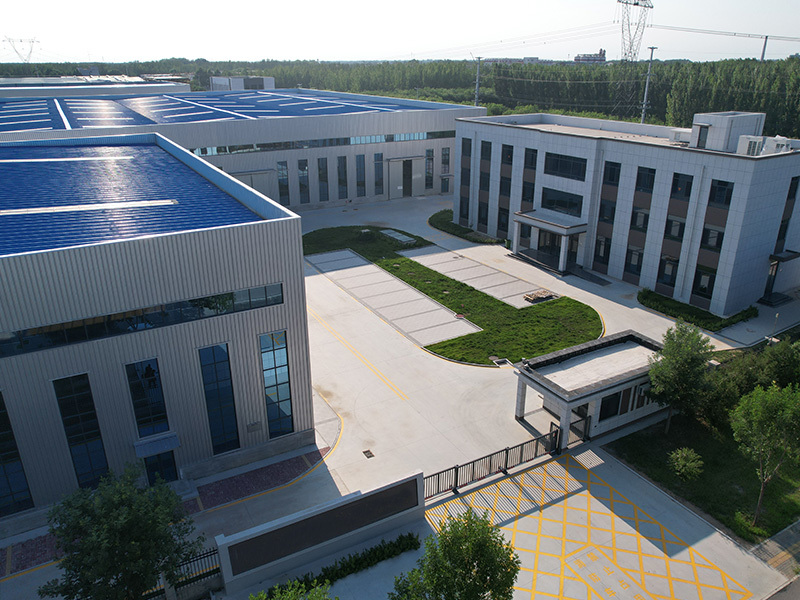
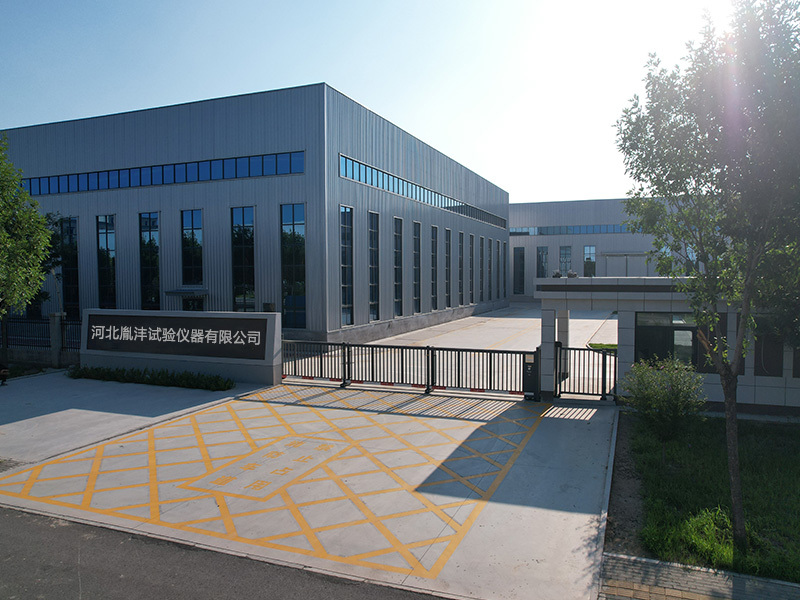
Hebei Yinfeng Experimental Instrument Co., Ltd. is a high-tech enterprise dedicated to the research and development, production, and sales of experimental instruments. The company is headquartered in Hebei Province, relying on the strong industrial foundation and technological innovation resources in the Beijing Tianjin Hebei region. It is committed to providing high-precision and high reliability testing equipment and solutions for material testing, engineering quality control, scientific research experiments and other fields.


Customized Delivery Process
We provide customers with full-process services ranging from pre-sale consultation, customized solution design, equipment installation and commissioning to after-sale technical support.
Online Communication
Provide Custom Drawings
Merchant Quotation
Sign A Contract
Processing And Production
Packaging And Distribution
Confirm Receipt Of Goods
Successful Transaction
Asphalt Rotating Thin-Film Oven
If you need customized products, Contact US !
Share to


Category
Tag list
Request a Quote
We will contact you within one working day. Please pay attention to your email.
Related Products
Content update in progress
Message
We will contact you within one business day. Please note your email address.
Fast navigation
Contact Us
Whatsapp/Tel: +86-15931715356,+86 16631790555
E-mail: qcj@cnhblabequipment.com
Add: Chengnan Industrial Zone, Xian County, Cangzhou City, Hebei Province

Online Message