



- Product Describe
-
I. Product Introduction
The LHS-1 asphalt moisture content tester is primarily used to determine the moisture content of petroleum asphalt, coal tar asphalt, or emulsified asphalt, among others.
II. Technical Parameters:
1. Volumetric tube capacity: 600 ml
2. Base diameter: 220mm
3. Weight block mass: 5 kg (4 blocks). The products specified in the requirements are also the standard products stipulated in the new test procedures.
Complies with the JTG E52-2011 standard.
4. External dimensions: 690*260*210mm
5. Weight: 8.5 kg
6. Power supply voltage: AC 220V/50Hz
7. Power: 1 kW
8. Ambient temperature: 5–40℃
9. Ambient humidity: ≤85%
III. Structure and Composition
1. The moisture content meter consists of the following components:
① Glass beaker: Made of hard glass, with a round bottom and short neck, 100 mm in diameter and 500 ml in capacity.
② Water Receptor: For volumes below 0.3 ml, the receiver is marked with 10 equal divisions; for volumes between 0.3 and 1 ml, it is marked with 7 equal divisions; and for volumes between 1 and 10 ml, each division corresponds to 0.2 ml. However, water receptors with adjacent precision levels may also be used.
③ Condenser: It can be of U-shaped or spherical design, with an inner tube diameter of 10 mm and a total length of 350–400 mm. The end of the inner tube is beveled. The outer jacket has a diameter of 40–50 mm and a length of 250–300 mm. The inlet and outlet water ports are located near the two ends; however, condensers with dimensions that are close to these specifications can also be used.
④. Iron stand: Equipped with an iron ring and an iron clamp. ⑤. Heater: Electric stove or gas stove.
⑥. Chassis
4. Instructions for Use:
1. Weigh the mass (m1) of the washed and dried glass flask accurately to 0.1 g.
2. Thoroughly shake the sample, or preheat it to 50–80°C until it becomes fluid, then transfer approximately 100 g (with a moisture content of at least 25%) or 50 g (with a moisture content exceeding 25%) into a glass flask. Weigh the total mass (m2) to an accuracy of 0.1 g.
3. Using a graduated cylinder, measure 200 ml of solvent and transfer it into the flask. Carefully shake the mixture in the flask, taking care not to let any spill out. Then, add a few glass capillary tubes or small pieces of porcelain enamel.
4. As shown in the figure, securely attach the branch tube of the cleaned and dried moisture receiver to the glass flask, ensuring that the beveled end of the branch tube extends 15–20 cm into the beaker. Then, connect the condenser to the receiver. Before installation, thoroughly dry the inner wall of the condenser with cotton. During assembly, align the axis of the condenser precisely with that of the moisture receiver, and make sure the beveled cut at the lower end of the condenser faces directly toward the opening of the receiver’s branch tube. To prevent steam from escaping, apply a layer of collodion around any gaps. If there is a significant temperature difference between the water entering the condenser and the room temperature, apply additional collodion around the stopper’s gap. Similarly, if the warm water entering the condenser differs substantially from the room temperature, seal the upper end of the condenser with a cotton plug to prevent atmospheric water vapor from entering and condensing inside the condenser.
V. Test Procedure:
1. Heat the flask and control the reflux rate of the condensate so that the inclined mouth of the condenser drips 2–5 drops of liquid per second.
2. During the reflux process, when the water in the water receiver reaches the maximum volume mark, stop heating. Once no more solvent drips out, quickly remove the receiver and pour the solvent into a graduated cylinder. Then reassemble the apparatus and continue heating for further reflux.
3. As the reflux is nearing completion, if water droplets have adhered to the inner wall of the condenser, briefly bring the mixture in the flask to a vigorous boil. Use the condensed solvent to wash as many of the water droplets as possible into the receiver.
4. Stop heating when the volume of water collected by the receiver no longer increases and the upper-layer solvent becomes completely transparent.
5. After stopping the heating, if there are still water droplets on the inner wall of the condenser, pour solvent into the upper end of the condenser to wash the water droplets into the receiver. If washing with solvent still doesn't work, use the rubber-tipped end of a fine glass rod to scrape the water inside the condenser into the receiver.
5. After the glass has cooled, disassemble the apparatus and record the volume (Vm) of water collected in the receiver or the graduated cylinder. If the solvent in the receiver becomes cloudy and the amount of water collected at the bottom of the tube does not exceed 0.2 ml, place the receiver in hot water for 20–30 minutes to clarify the solvent. Then, allow the receiver to cool back to room temperature before recording the volume of water collected at the bottom of the tube.
VI. Precautions:
This instrument cannot be heated too quickly all at once.
Prevent short-neck round-bottom flasks.
Company Profile
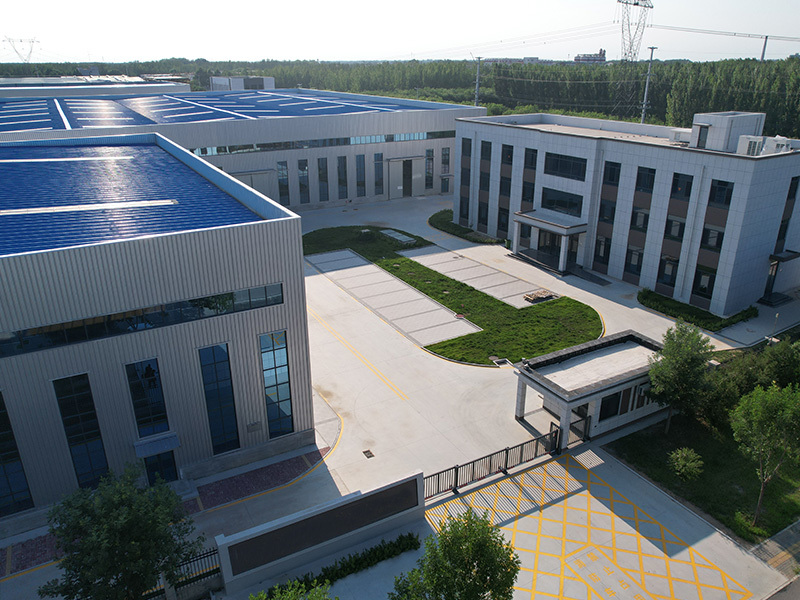
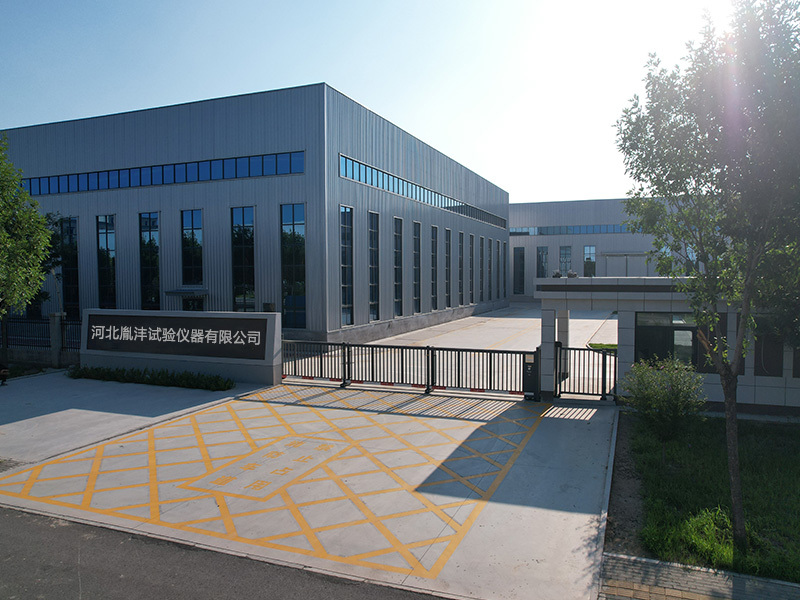
Hebei Yinfeng Experimental Instrument Co., Ltd. is a high-tech enterprise dedicated to the research and development, production, and sales of experimental instruments. The company is headquartered in Hebei Province, relying on the strong industrial foundation and technological innovation resources in the Beijing Tianjin Hebei region. It is committed to providing high-precision and high reliability testing equipment and solutions for material testing, engineering quality control, scientific research experiments and other fields.


Customized Delivery Process
We provide customers with full-process services ranging from pre-sale consultation, customized solution design, equipment installation and commissioning to after-sale technical support.
Online Communication
Provide Custom Drawings
Merchant Quotation
Sign A Contract
Processing And Production
Packaging And Distribution
Confirm Receipt Of Goods
Successful Transaction
LHS-1 Asphalt Moisture Content Tester
If you need customized products, Contact US !
Share to


Category
Tag list
Request a Quote
We will contact you within one working day. Please pay attention to your email.
Related Products
Content update in progress
Message
We will contact you within one business day. Please note your email address.
Fast navigation
Contact Us
Whatsapp/Tel: +86-15931715356,+86 16631790555
E-mail: qcj@cnhblabequipment.com
Add: Chengnan Industrial Zone, Xian County, Cangzhou City, Hebei Province

Online Message