



- Product Describe
-
I. Uses:
The fully automatic mixing machine is an essential piece of equipment for preparing specimens of asphalt-sand-and-gravel mixtures or cement-sand-and-gravel mixtures. This machine fully complies with all the requirements specified in the Ministry of Transport’s JTG E20-2011 “Test Procedures for Asphalt and Asphalt Mixtures in Highway Engineering.” Currently, it is widely used in laboratories of research, construction, and supervision departments within highway systems.
II. Structure and Working Principle:

Figure 1: Schematic Diagram of the Structural Principle
1-Body 2-Control panel 3-Positioner 4-Stirring motor 5-Stirring head 6-Stirring paddle
7-temperature sensor 8-heating pot 9-tightening handle
The structural principle of this machine is shown in Figure 1. It consists of three main components: a heating pot, a stirrer, and...
Lifting mechanism: The heating pot temperature can be set arbitrarily within the range of room temperature to 250℃ and is automatically controlled. The stirrer consists of a stirring head, a motor, and a stirring paddle. During operation, the stirring paddle performs both revolution and rotation inside the pot, thoroughly mixing the ingredients. The stirring time is controlled by a timer and can be set freely within the range of 1 to 9999 seconds. The lifting mechanism comprises components such as a motor, a belt reducer, and a lead screw, which are used to raise and lower the stirrer. When loading or discharging materials, the stirrer rises to its highest position; when stirring, the stirrer descends to its lowest position. Figure 2 illustrates the three different operating states of this machine.

(1) Feeding (2) Mixing (3) Discharging
Figure 2: Three Different Operating States of the Mixer
III. Main Technical Specifications
Mixing capacity: 10 liters / 20 liters
Heating pot temperature range: Room temperature ~ 250℃ (arbitrarily set)
Temperature control accuracy: ±3℃
Mixing time: 1–9999 seconds (arbitrarily set)
Agitator rotation speed: 48 revolutions per minute for revolution.
80 revolutions per minute
Working conditions
Temperature: -10℃~40℃
Relative humidity: not greater than 80%.
Power supply voltage: ~220V ±10%, current: 20A
4. Instructions for Use
1. Machine installation
After unpacking the machine, proceed with installation. The installation surface should have a solid foundation, and sufficient clearance should be maintained from walls and nearby fixed objects.
Greater than 0.6 meters. During installation, place the machine on a concrete foundation and ensure it remains stable and vibration-free; it can be secured using anchor bolts. For ease of operation, this machine is equipped with a main power switch. Simply plug in the power cord, and the machine will enter the ready-to-operate state. To start or stop the machine during operation, just press the “Main Power” button on the control panel.
When installing the power supply, the machine should be properly grounded to prevent electric leakage and potential injury.
2. Operation Panel Instructions
Human-machine interface

Figure 3: Operation Panel
(1) Status indicator light
Temperature Control: When the controller is in temperature control mode, the temperature control indicator light will illuminate.
Heating: This indicator light will illuminate when the heater is heating.
Stirring: This indicator light will illuminate when stirring is started.
Rising: The indicator light illuminates when the lifting motor is in the rising position.
Descending: The indicator light illuminates when the motor is descending.
Upper limit: This indicator light will illuminate when the upper limit switch is activated.
Lower limit: This indicator light will illuminate when the lower limit switch is activated.
- Display window area
Temperature Display Area—Displays in real time the temperature of the object currently measured by the sensor.
Timer Display Area—When the stirring starts, this area displays the elapsed stirring time. As the time approaches the set duration, the display area will flash. Once the set time is reached, the stirring will automatically stop, and the lifting motor will automatically rise.
(3) Button Input Area
In standby mode, tap to enter the target temperature setting interface. Once inside, the digital display on the temperature indicator will flash. You can modify the temperature value using the corresponding keys. After completing the modification, press the key again to save the set value and exit the temperature setting interface.


In standby mode, tap to enter the mixing time setting interface. Once inside, the digital display in the timer display area will flash. You can modify the timer value by adjusting it accordingly. After completing the modification, press the button again to save the set value and exit the timer setting interface.

: Enters and then exits the temperature control mode.

Start the搅拌, and the timer display area will begin timing. When the搅拌 is running, you can tap this button to pause it.

Manually reset the timer and turn off the搅拌.

The three buttons control the lifting motor. During the lifting process, pressing the “down” button is ineffective; you must first press the emergency stop button and then the “down” button. Conversely, during the lowering process, pressing the “up” button is ineffective; you must first press the emergency stop button and then the “up” button.


V. Operating Steps
1. Preparatory work
Once the power is turned on, all components will enter the ready state. First, set the mixing time and heating temperature according to the procedure or operational requirements. Press the “Temperature Control” button to activate the temperature-control heating system. In about 30 minutes, the inner wall of the pot will reach the preset temperature. At this point, the machine can begin operation.
2. Filler
Press the “Raise” button on the control panel, and the stirring head will automatically rise to its highest position. At this point, pour the preheated mixture into the pot.
3. Mixing
Press the “Lower” button, and the mixer will automatically lower to its lowest position and extend into the pot. Then, press the middle of the control panel. “ Click the “Button,” and the stirring paddle will begin to stir. When the preset time is reached, the machine will automatically stop. During the stirring process, if an emergency occurs, you can press the “Emergency Stop” button, and the stirrer will immediately cease operation.
To reduce the resistance when lowering the agitator, first start the agitator and then press the “Lower” button to lower it.
4. Discharge
Press the “Raise” button to lift the stirring head to its highest position. Use the handle to loosen the locking nut, open the locator, and then invert the pot 90° using the handle. Use a spatula to scoop out the mixed material, which will slide down onto the mold via the slide plate. Finally, prepare the specimen as needed.
5. Cleaning
After the mixture has been thoroughly mixed and the test specimens have been prepared, disconnect the power supply and clean the machine. In particular, ensure that no asphalt residue or debris remains on the heating pot, sliding plates, or搅拌 blades.
VI. Maintenance and Care
1. The lead screw and guide shaft of the lifting mechanism should be regularly lubricated with grease.
2. The gearbox of the mixer should have its lubricating oil replaced once a year.
3. When the machine is not used for an extended period, it should be covered to prevent dust from entering.
4. Protect exposed wires carefully—do not allow them to bear any tension, and ensure they are not punctured by sharp objects or crushed by heavy weights.
VII. Precautions
1. Once the heating pot reaches the set temperature, there will still be a temperature overshoot phase. This is because, after the heater stops heating, the heater itself continues to transfer heat to the heating pot, so there’s a subsequent phase during which the temperature keeps rising even after heating has been stopped.
2. When testing the temperature-control system, a certain amount of heating material—such as pebbles—must be placed inside the heating pot.
Sand, water, and other materials are all acceptable, as they help transfer the temperature from the heating pot’s surface to the heated object, thereby reducing temperature overshoot. Otherwise, the temperature inside the heating pot would be significantly higher than the preset temperature, leading users to mistakenly believe that the temperature-control system is malfunctioning.
3. Temperature error:
The sensor of the temperature controller is positioned on the outer surface of the heating pot, which results in a slight discrepancy between the measured temperature and the actual temperature of the heated material at the center of the pot. This is a normal phenomenon; users should rely on the set temperature when operating the device.
4. During storage and transportation, the instrument is inevitably exposed to humid air, which can cause varying degrees of deterioration in its electrical insulation performance—especially in the heater, where the decline will be more pronounced. At the initial stage of power-on, you may experience varying degrees of tingling or mild electric shock due to induction. However, once the heating switch is turned on, everything will return to normal within a few minutes. Therefore, it is essential to ensure reliable grounding before use; the grounding terminal must be connected to the ground hole on the power outlet. Otherwise, you will be solely responsible for any resulting consequences.
5. The lifting rod should be regularly lubricated with grease, at least once per shift.
Spare part: 1 lifting V-belt (fitted onto the lifting rod inside the chassis)
Spare parts: material-drawing scoop, discharge slide.
6. The machine must be connected to the ground wire!!! While the machine is operating: Do not put your hands or other objects into the heating pot to avoid accidents!!!
Company Profile
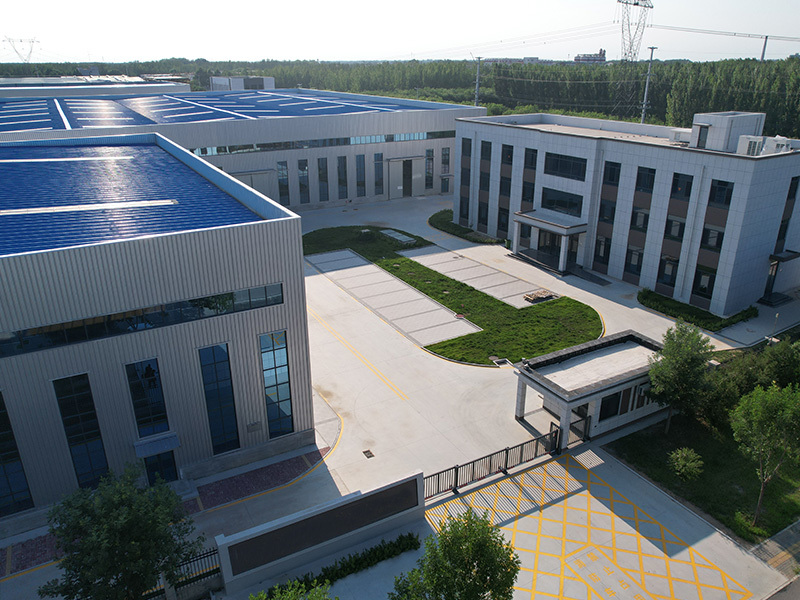
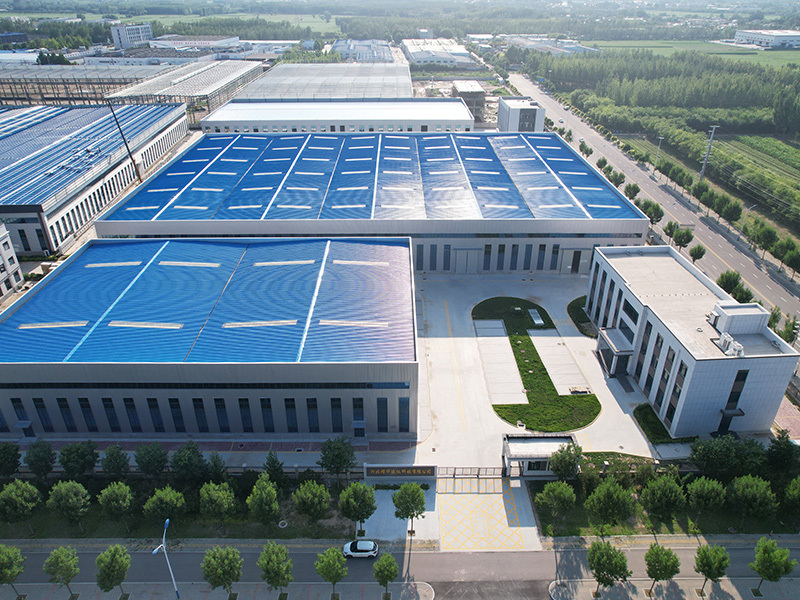
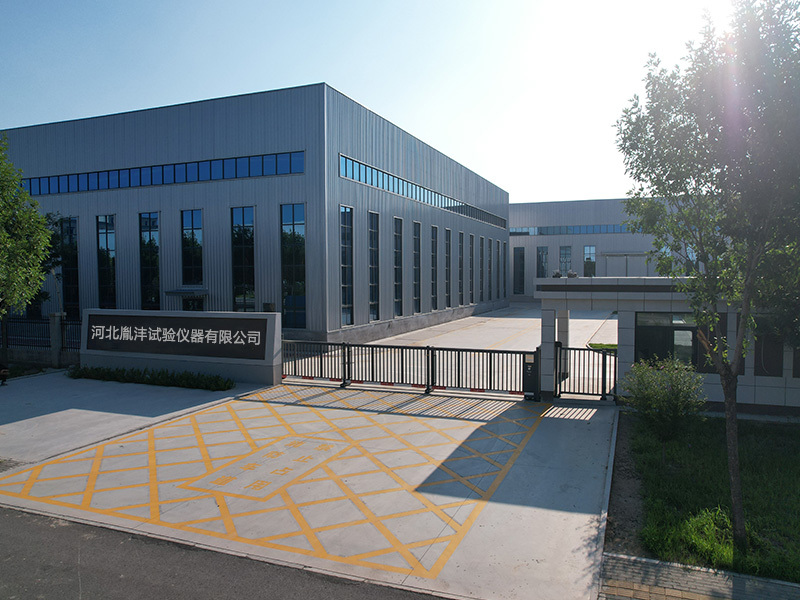
Hebei Yinfeng Experimental Instrument Co., Ltd. is a high-tech enterprise dedicated to the research and development, production, and sales of experimental instruments. The company is headquartered in Hebei Province, relying on the strong industrial foundation and technological innovation resources in the Beijing Tianjin Hebei region. It is committed to providing high-precision and high reliability testing equipment and solutions for material testing, engineering quality control, scientific research experiments and other fields.

Customized Delivery Process
We provide customers with full-process services ranging from pre-sale consultation, customized solution design, equipment installation and commissioning to after-sale technical support.
Online Communication
Provide Custom Drawings
Merchant Quotation
Sign A Contract
Processing And Production
Packaging And Distribution
Confirm Receipt Of Goods
Successful Transaction
Previous:
Fully automatic asphalt mixture mixer
If you need customized products, Contact US !
Share to


Category
Tag list
Request a Quote
We will contact you within one working day. Please pay attention to your email.
Related Products
Content update in progress
Message
We will contact you within one business day. Please note your email address.
Fast navigation
Contact Us
Whatsapp/Tel: +86-15931715356,+86 16631790555
E-mail: qcj@cnhblabequipment.com
Add: Chengnan Industrial Zone, Xian County, Cangzhou City, Hebei Province

Online Message