



- Product Describe
-
Equipment Name: Static Cone Penetrometer
Device model: CLD-3A
Overview:
The CLD-3A static cone penetrometer uses mechanical transmission to steadily press the probe into the soil at a uniform speed.
Suitable for testing in strata such as soft soil, cohesive soil, loess, and sandy soil, this device utilizes the resistance generated when the probe comes into contact with the soil. The change in resistance is converted into an electrical signal and transmitted to measuring instruments on the ground. The entire unit features lightweight components and a compact size, making it easy to carry and install. It boasts high operational efficiency and can be equipped with probes and sensors of various diameters.
- Technical Parameters
- Structural form: main unit (entire machine), ground anchor, hand-crank type.
- Rated penetration force: CLD-3 30 kN.
- Cross-plate shear: <132 kPa
- Pull-out force: 15 kN, 25 kN.
- Penetration speed: 1.2 meters/minute.
- Host weight: 60 kg.
- Working principle
- Connect the main unit to the beam (9) with screws.
- Select the anchor points according to the length of the beam, and drive two ground anchors (11) into the soil (on both sides of the main unit).
- To set the anchor, you can use the anchoring force tube (7) and have two people push it at a steady pace, or you can use large pipe wrenches to set the anchor.
- Install the host between the two anchor rods, ensuring it is placed horizontally and securely filled with soil so that it does not shake.
- Insert the ground anchor clamp (12) into the ground anchor rod and place it on the crossbeam.
- Arrange the probe rods one by one, threading the cable wires through each rod individually. Connect one end of the cable to the probe—secure the cable connection with waterproof tape—and absolutely ensure that no water seeps into the cable (as water ingress could damage the probe). Connect the other end to the instrument.
- Attach the probe to the probe rod, then pass it through both the upper and lower holes. Connect the probe rods one by one (tighten the connections at the joints). Place the guide sleeves (2) and (10) onto the lower holes of the main unit, and clamp the probe rods securely to prevent them from swaying left or right.
- Insert the locking block (5) into the probe rod joint. As you press the probe into the soil, place a wedge-shaped pressure plate (6) on top of the locking block. Then, shake the main unit’s handle to rotate the chains on both sides of the main unit. The chain stop pins (4) on either side of the chains will hold the wedge-shaped plate in place, allowing you to steadily push the probe into the soil at a uniform speed.
- When lifting, place the mountain-shaped plate beneath the locking block, then reverse-rotate the main unit handle to slowly raise the probe.
- The vane shear test (available separately upon customer request): Place the worm gear box on the main unit using the same method. Each full rotation of the worm gear box handle corresponds to 1 degree; simply record this data.
- When conducting an undisturbed soil shear test using a vane shear apparatus, insert the vane to the test depth and allow it to remain stationary for 2–3 minutes before starting the undisturbed soil vane shear test.
- For the remolded soil shear test, after the undisturbed soil test is completed, rotate the vane six full turns along the shear direction to thoroughly disturb the surrounding soil, and then begin the remolded soil shear test.
- Precautions
- When using the machine for the first time after it leaves the factory, users should apply oil or grease between all gears and sprockets. During the running-in period, please have a mechanical professional adjust the machine as needed.
- If a cross-plate shear test is required, you’ll need to purchase a worm gear box and place it on top of the main unit; all other procedures remain the same.
- After each job is completed, please oil, clean, and store it properly to prevent rusting.
- The probe rod undergoes heat treatment at our factory, ensuring that both its hardness and toughness exceed those of ordinary steel. The joints also need to be lubricated.
- The probe must be disassembled, cleaned, and lubricated after use.
IV. After-sales Services
1. If quality issues are discovered more than one month after the instrument is sold, and as long as the exterior shows no damage and the user has not disassembled or repaired it themselves, the entire unit can be replaced upon presentation of the invoice (excluding the exterior).
2. For all instruments sold, the warranty period is one year, calculated from the invoice date. If the user disassembles or repairs the instrument without the manufacturer’s or dealer’s consent, or if the instrument is improperly used or damaged beyond repair, the user shall bear full responsibility.
3. Even after the warranty period has expired, the manufacturer will still be responsible for repairs, charging only the cost of labor and materials.
5. The probe must be properly stored and carefully protected against water ingress. The cable connectors should be tightly sealed with waterproof tape to prevent water from entering. As the probe is a consumable item, it is not covered under warranty. It should be periodically calibrated according to usage conditions. If the probe has been in use for over one year, it is recommended to replace it with a new one and return both the probe and the original instrument to our factory for professional inspection and calibration. This is to avoid aging of electronic components or reduction in probe sensitivity, thereby ensuring the accuracy of the measured data. (If the on-site testing results are satisfactory, there is no need to replace the probe; simply adjust the instrument’s settings for calibration yourself.)
6. If you encounter any other technical issues that cannot be resolved, please contact your dealer promptly. Thank you for choosing our products—we will do our utmost to serve you.

Host schematic diagram
CLD-3A Static Cone Penetrometer Configuration List
Serial number Name Unit Quantity Note 1 Host rack Taiwan 1 2 Probe rod root 20 3 Ground anchor root 2 4 Ground anchor pressure iron Only 2 5 Ground anchor rod clamp Only 2 6 Anchor and force lever root 2 7 crank Only 2 8 Mountain-shaped pressure plate Only 1 9 Card block Only 1 10 Guide sleeve Pay 2 11 Probe connector one 1 12 Measuring instrument Taiwan 1 Or quietly explore the microcomputer. 13 Single-bridge probe Only 1 14 Reducing coupling Only 20 15 4-core cable Rice 25 Instruction Manual for the Static Cone Penetrometer Controller
I. Overview
This system employs a high-performance, low-power microprocessor and features a 3.5-inch color touchscreen with high-definition display. The data acquisition module utilizes a high-precision AD conversion chip to ensure the accuracy and stability of the collected data. A large-capacity storage device is used to store acquisition data from up to 300 points. The system is powered by a lithium battery capable of delivering up to 5000 mA, enabling continuous operation for over 30 hours.
II. Page Introduction
1. Startup screen

2. After clicking “Enter Main Interface,” the following screen will appear:

“Settings” key: Used for parameter settings and calibration data.
“Query” key: Query test data.
“Second” key: If the test is interrupted due to an unexpected situation, you can press this key after restoring power to resume the previous test.
“Test” key: Start the test.
III. Precautions:
Do not operate on the calibration data of this system if you are not from the metrology department.
Company Profile
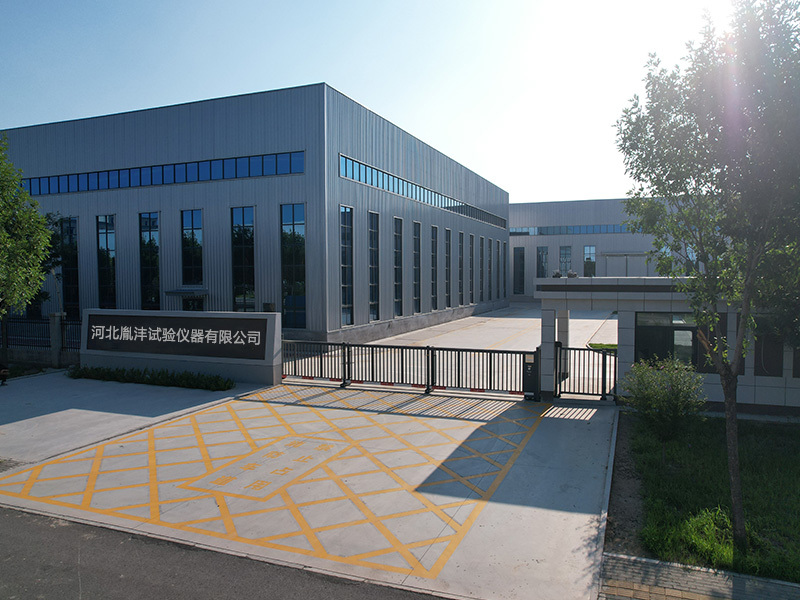
Hebei Yinfeng Experimental Instrument Co., Ltd. is a high-tech enterprise dedicated to the research and development, production, and sales of experimental instruments. The company is headquartered in Hebei Province, relying on the strong industrial foundation and technological innovation resources in the Beijing Tianjin Hebei region. It is committed to providing high-precision and high reliability testing equipment and solutions for material testing, engineering quality control, scientific research experiments and other fields.



Customized Delivery Process
We provide customers with full-process services ranging from pre-sale consultation, customized solution design, equipment installation and commissioning to after-sale technical support.
Online Communication
Provide Custom Drawings
Merchant Quotation
Sign A Contract
Processing And Production
Packaging And Distribution
Confirm Receipt Of Goods
Successful Transaction
Previous:
Single-bridge static cone penetrometer. Static cone penetrometer
If you need customized products, Contact US !
Share to


Category
Tag list
Request a Quote
We will contact you within one working day. Please pay attention to your email.
Related Products
Content update in progress
Message
We will contact you within one business day. Please note your email address.
Fast navigation
Contact Us
Whatsapp/Tel: +86-15931715356,+86 16631790555
E-mail: qcj@cnhblabequipment.com
Add: Chengnan Industrial Zone, Xian County, Cangzhou City, Hebei Province

Online Message