



- Product Describe
-
Product Overview
Based on the standard GB 10299–2011 “Test Method for Hydrophobicity of Thermal Insulation Materials,” this method is primarily used to test the hydrophobicity of thermal insulation materials such as perlite, mineral wool, polystyrene foam, and rigid polyurethane foam.
Technical Parameters of the Hydrophobicity Tester for Thermal Insulation Materials:
1. Glass rotor flowmeter: 10–100 L/h, accuracy class 2.5
2. Specimen dimensions: 300 × 150 mm
3. Metal nozzle diameter: 48 mm
4. External Dimensions: 410 × 205 × Height 590 mm (Length × Width × Height)
5. Weight: 13.5 kg
6. Stable water source, water connector, flexible water delivery hose, horizontal base, and specimen holder with scale.Instrument Structure:
1. Principle of the Hydrophobicity Tester for Thermal Insulation Materials: The specimen is placed at a 45° angle to the horizontal… 0 The specimen is placed at an angle, with its center positioned directly beneath the nozzle at a specified location. Water is sprayed onto the specimen at a predetermined flow rate for a specified duration. By measuring the change in the specimen’s mass before and after spraying, the volume percentage of the portion of the specimen that remains impermeable to water can be calculated.
2. Water Spraying Device: Composed of metal nozzles, glass rotor flowmeters, and a constant-pressure water source, connected via rubber tubing. The center of the metal nozzles is located on the longitudinal symmetry axis of the test surface and can be moved along the specimen holder.3. Sample Holder: The sample holder is mounted at a 450-degree angle on a support that can be adjusted for level.
4. The glass rotor flowmeter has a flow range of 10–100 L/h and an accuracy class of 2.5.
5. Metal Nozzle: The spray surface is convex and circular. It is evenly equipped with 19 holes, each with a diameter of Φ0.9 mm. When the nozzle is tested at the position specified in Figure 1, the transverse dimension of the area exposed to the spray is 148 mm.
Accessory equipment for the hydrophobicity tester of thermal insulation materials:
1. Balance: The smallest graduation value shall not exceed 0.5% of the mass being weighed.
2. Drying oven.
3. GBT6342 Insulation Board Thickness Gauge: Presser plate pressure 98 Pa, graduation value 0.1 mm.
4. Dial Caliper: Measuring range 0–150 mm, graduation value 0.02 mm.
5. Steel ruler: Measuring range 0–300 mm, graduation interval 1 mm.
Test Procedure:
The dimensions of plate-shaped specimens are 300 mm × 150 mm, with a thickness equal to the original thickness of the product. Tubular specimens are 300 mm long, with a semi‑circular or sector-shaped cross‑section, and a wall thickness equal to the original wall thickness of the product. When preparing specimens, every effort should be made…
To ensure the sample is representative, do not collect samples from areas that are wrinkled or have surface damage. For foam plastic products, the outer skin should be removed.
Place the specimen in a drying oven and dry it at 105 ± 5°C until a constant weight is achieved. When the specimen is prone to deformation at this temperature or contains volatile, easily altered components, it may be dried to constant weight at 60 ± 5°C or at a temperature 5–10°C below its volatilization temperature. Weigh the specimen to determine its mass, m1.
(2) Measure the dimensions of the specimens after drying. For plate‑shaped products, measure the length and width on both the front and back sides of the specimen, taking four readings for each dimension, with readings accurate to 1 mm. Use a thickness gauge to measure the thickness of flexible products, and a vernier caliper to measure the thickness of rigid products, taking three evenly spaced measurements along the length of the specimen, with readings accurate to 0.1 mm. For tubular products, measure the inner and outer diameters at both ends of the specimen, taking four readings at each location. Measure the length twice, with readings accurate to 1 mm. The average value shall be taken for each dimension measurement. Calculate the specimen’s thickness (or wall thickness) and volume.
(3) Place the specimen on the hydrophobicity tester (for specimens that have undergone hydrophobic treatment on only one side, measure the hydrophobicity of both sides separately; for plate‑shaped products, adjust the nozzle position according to the specimen thickness to meet the requirements shown in Figure 1. For tubular products, orient the inner surface downward and adjust the nozzle position so that the upper half of the specimen is evenly exposed to the spray). Adjust the water flow rate to a stable 1 L/min, then spray continuously for 1 hour. Afterward, remove the specimen, quickly blot away surface water droplets with crepe paper, and immediately weigh the specimen to determine its mass m2.
Calculation of Results for the Hydrophobicity Tester for Insulation Materials:
1. The water repellency (%) is calculated according to Formula (1).
In the formula: V1 — the volume of water absorbed by the specimen (cm³);
V — Volume of the specimen (cm³);
m2: the mass (g) of the specimen after being rinsed with water;
m1—Mass of the specimen before water immersion (g);

P—Density of water, P_water = 1 g/cm³
2. The water permeability per unit area (kg/m²) is calculated according to Equation (2):
In the formula, S represents the area of the specimen exposed to the spray (cm²);
10—Conversion Factor
3. Take three significant figures for the test results.
Company Profile
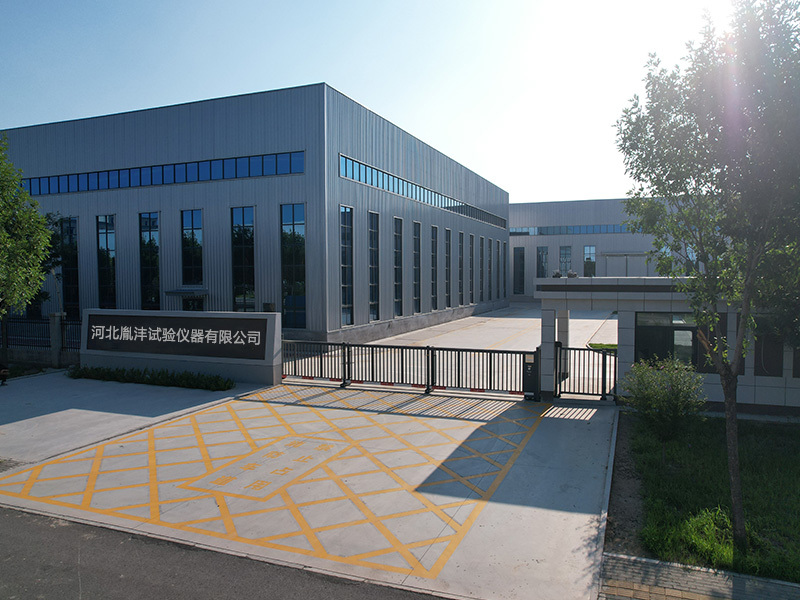
Hebei Yinfeng Experimental Instrument Co., Ltd. is a high-tech enterprise dedicated to the research and development, production, and sales of experimental instruments. The company is headquartered in Hebei Province, relying on the strong industrial foundation and technological innovation resources in the Beijing Tianjin Hebei region. It is committed to providing high-precision and high reliability testing equipment and solutions for material testing, engineering quality control, scientific research experiments and other fields.



Customized Delivery Process
We provide customers with full-process services ranging from pre-sale consultation, customized solution design, equipment installation and commissioning to after-sale technical support.
Online Communication
Provide Custom Drawings
Merchant Quotation
Sign A Contract
Processing And Production
Packaging And Distribution
Confirm Receipt Of Goods
Successful Transaction
Previous:
Hydrophobicity Tester for Insulation Materials
If you need customized products, Contact US !
Share to


Tag list
Request a Quote
We will contact you within one working day. Please pay attention to your email.
Related Products
Content update in progress
Message
We will contact you within one business day. Please note your email address.
Fast navigation
Contact Us
Whatsapp/Tel: +86-15931715356,+86 16631790555
E-mail: qcj@cnhblabequipment.com
Add: Chengnan Industrial Zone, Xian County, Cangzhou City, Hebei Province

Online Message