



- Product Describe
-
Overview
This instrument is designed in accordance with the provisions of Railway Concrete—China Railway Industry Standard TB/T 3275-2018, China National Industry Standard JGJ 52-2006 “Standard for Quality and Test Methods of Sand and Coarse Aggregate for Ordinary Concrete,” and China National Industry Standard JTG E42-2005, specifically T0325-1994 “Test for Alkali Reactivity of Aggregates (Mortar Length Method),” and is used to measure the length change of cement mortar specimens in order to determine whether the expansion caused by the reaction between alkalis in cement and reactive aggregates poses a potential hazard.
Main Parameters
Total weight of the vibrating part 4.35 kg ± 0.15 kg Materials Cast steel, with a hard-chrome-plated working surface Diameter φ300mm+1mm Vibration drop height 10 mm ± 0.2 mm Number of vibrations 6 seconds, 10 times Upper diameter of the frustum-shaped circular mold 70 mm ± 0.5 mm Lower opening diameter of the frustum mold 100 mm ± 0.5 mm Height of frustum circular mold 60 mm ± 0.5 mm Pestle length 200 mm ± 0.5 mm Pestle diameter 20 mm ± 0.5 mm Installation and commissioning
The instrument must be reliably grounded.
The instrument is secured to the base using expansion bolts. The instrument base is constructed of cast-in-place concrete (or a brick-and-concrete foundation) with a bottom dimension of approximately 400 mm × 400 mm and a height of about 690 mm. Washers should be placed between the base and the instrument frame; the level of the work surface can be adjusted by varying the thickness of these washers. After installation, the work surface must remain horizontal when measured along two diametral directions that are perpendicular to each other.
How to use
According to the specified procedure, the mixed cement mortar shall be promptly placed into the mold in two layers. The first layer shall be compacted to approximately one-third of the height of the truncated conical mold; a small knife shall then be used to make 10 cuts in two mutually perpendicular directions, followed by 15 uniform tamping strokes with a tamping rod, moving from the edge toward the center. Next, the second layer of mortar shall be placed, bringing the level about 20 mm above the top of the truncated conical mold; again, 10 cuts shall be made with the small knife in two mutually perpendicular directions, and then 10 uniform tamping strokes shall be performed with the tamping rod, also moving from the edge toward the center. The tamping force should be just sufficient to ensure that the mortar completely fills the truncated conical mold. As for the tamping depth, the first layer should be tamped down to between one-half and one-third of its original height, while the second layer should be tamped no deeper than the surface of the previously compacted lower layer.
After compaction is complete, remove the mold sleeve, tilt the trowel, and, moving from the center toward the edges in two passes at a nearly horizontal angle, smooth off the excess mortar that extends above the truncated conical mold; also wipe away any mortar that has fallen onto the work surface. Then gently lift the truncated conical mold vertically upward and remove it. Immediately press the “Start” button on the counter to activate the vibration table, allowing one cycle—consisting of 10 vibrations over 6 seconds—to run. Upon completion of the vibrations, use a 300-mm caliper to measure the spread diameters of the mortar in two mutually perpendicular directions at the base, calculate the average, round to the nearest integer, and express the result in millimeters. This average value is the cement mortar flowability.
Maintenance and Care
After use, the instrument should be thoroughly cleaned, any residual mortar around it removed, and the push rod, work surface, and cam surfaces lightly lubricated with light oil. If the instrument is to remain unused for an extended period, it should be protected from dust, and the controller should be stored in its packaging box.
Company Profile
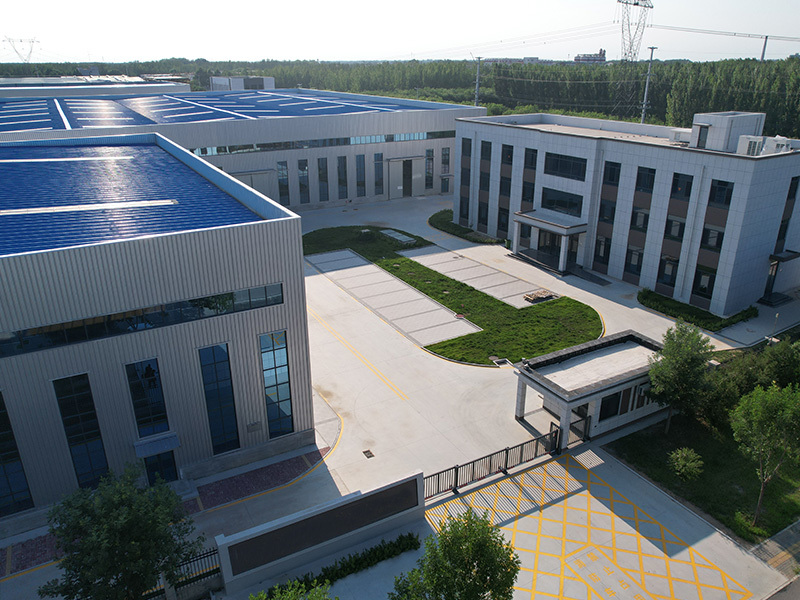
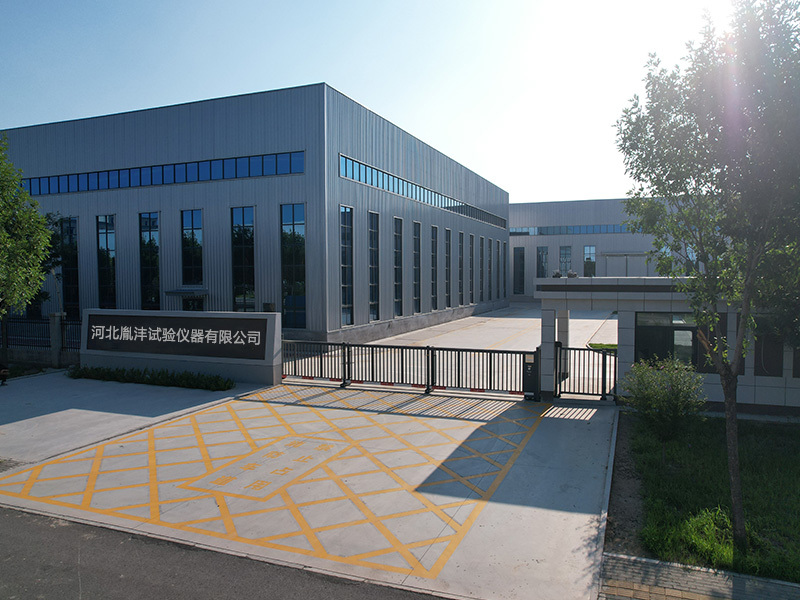
Hebei Yinfeng Experimental Instrument Co., Ltd. is a high-tech enterprise dedicated to the research and development, production, and sales of experimental instruments. The company is headquartered in Hebei Province, relying on the strong industrial foundation and technological innovation resources in the Beijing Tianjin Hebei region. It is committed to providing high-precision and high reliability testing equipment and solutions for material testing, engineering quality control, scientific research experiments and other fields.


Customized Delivery Process
We provide customers with full-process services ranging from pre-sale consultation, customized solution design, equipment installation and commissioning to after-sale technical support.
Online Communication
Provide Custom Drawings
Merchant Quotation
Sign A Contract
Processing And Production
Packaging And Distribution
Confirm Receipt Of Goods
Successful Transaction
Previous:
Alkali-Aggregate Jumping Table
If you need customized products, Contact US !
Share to


Tag list
Request a Quote
We will contact you within one working day. Please pay attention to your email.
Related Products
Content update in progress
Message
We will contact you within one business day. Please note your email address.
Fast navigation
Contact Us
Whatsapp/Tel: +86-15931715356,+86 16631790555
E-mail: qcj@cnhblabequipment.com
Add: Chengnan Industrial Zone, Xian County, Cangzhou City, Hebei Province

Online Message