



- Product Describe
-
Introduction
The vacuum saturation tester complies with the requirements of GB/T 17794-2021, “Flexible Foam Rubber and Plastic Thermal Insulation Products.” The vacuum-generation system for this standard is independently designed and manufactured, allowing users to set the vacuum pressure and holding time as needed. The instrument features automatic timing and automatic power-off, offering flexible operation, low energy consumption, minimal noise, easy installation, simple operation, and high safety performance. It is used in the field of building-materials testing technology, where recirculated degassed water is employed to enhance measurement accuracy.
Technical Specifications
The equipment consists of a vacuum pump, a timer, and other components.
Vacuum level not less than 0.085 MPa, accuracy 20 kPa
The pumping time required to achieve a vacuum level of 0.085 MPa shall not exceed 2 minutes.
Test volume: Φ170 × 250 (effective volume)
Specimen holder: accommodates three 100×100 square test specimens or two circular test specimens.
Timing range: 0–99 minutes and 99 seconds, with 1-second accuracy.
Power supply voltage: 220V 50Hz
Power: 150 W.
External dimensions: 550 x 370 x 570 (length x width x height)
How to use
1. Before use, connect the grounding wire and the residual current device. Place the test specimen inside the acrylic cylinder, securely close the top cover, and ensure that the lower limit pointer on the vacuum gauge reads 0.082 and the upper limit pointer reads 0.086. Set the timer for 3 minutes (pre-set at the factory). Press the test button; when the vacuum pump reaches the upper pressure limit, it will automatically stop. After 3 minutes, the system will shut down automatically. If the intermediate pressure drops below the set level, the pump will automatically resume pumping to maintain a constant pressure at all times.
2. After shutdown, first open the vent valve to release the vacuum pressure, then remove the test specimen. At the end of the experiment, reopen the water valve to drain the water.
Test Procedure
C.4 Test Procedure
C.4.1 Weigh the test specimen to an accuracy of 0.01 g to obtain the initial mass M. 1。
C.4.2 Fill the vacuum vessel with distilled water to an appropriate level.
C.4.3 Place the test specimen on the specimen holder and immerse it completely in water. Close the vacuum container lid, turn on the vacuum pump, and then cover the unit with the protective shield. When the vacuum level reaches 85 kPa, start timing and maintain the 85 kPa vacuum for 3 minutes. After 3 minutes, shut off the vacuum pump, open the air inlet of the vacuum container, and remove the specimen after another 3 minutes. Use absorbent paper to blot away all water from the specimen surface, including the inner wall of the tube and both ends. Gently wipe off any remaining surface moisture; when removing water from the inner wall of the tube, roll the absorbent paper into a rod-shaped probe and insert it into the tube. This procedure must be completed within 1 minute.
C.4.4 Weigh the test specimen to an accuracy of 0.01 g to obtain the final mass M. 2。
C.5 Calculation of Vacuum Water Absorption
The vacuum water absorption rate is calculated according to Formula (C.1).
C.4 Test Procedure
C.4.1 Weigh the test specimen to an accuracy of 0.01 g to obtain the initial mass M. 1
C.4.2 Fill the vacuum vessel with distilled water to an appropriate level.
C.4.3 Place the test specimen on the specimen holder and completely immerse it in water. Close the vacuum container lid, turn on the vacuum pump, and then cover the unit with the protective shield. When the vacuum level reaches 85 kPa, start timing and maintain the 85 kPa vacuum for 3 minutes. After 3 minutes, shut off the vacuum pump, open the air inlet of the vacuum container, and remove the specimen. Use absorbent paper to blot away all water from the specimen surface, including the inner wall of the tube and both ends. Gently wipe off any remaining surface moisture; when removing water from the inner wall of the tube, roll the absorbent paper into a rod-shaped probe and insert it into the tube. This procedure must be completed within 1 minute.
C.4.4 Weigh the test specimen to an accuracy of 0.01 g to obtain the final mass M. 2
C.5 Calculation of Vacuum Water Absorption
The vacuum water absorption rate is calculated according to Formula (C.1).
In the formula:
P—Vacuum water absorption percentage;
M 1 —Initial mass of the test specimen, in grams (g);
M 2 —Final mass of the test specimen, in grams (g).
Round the calculation result to the nearest integer.
Type YTPM-1
Company Profile
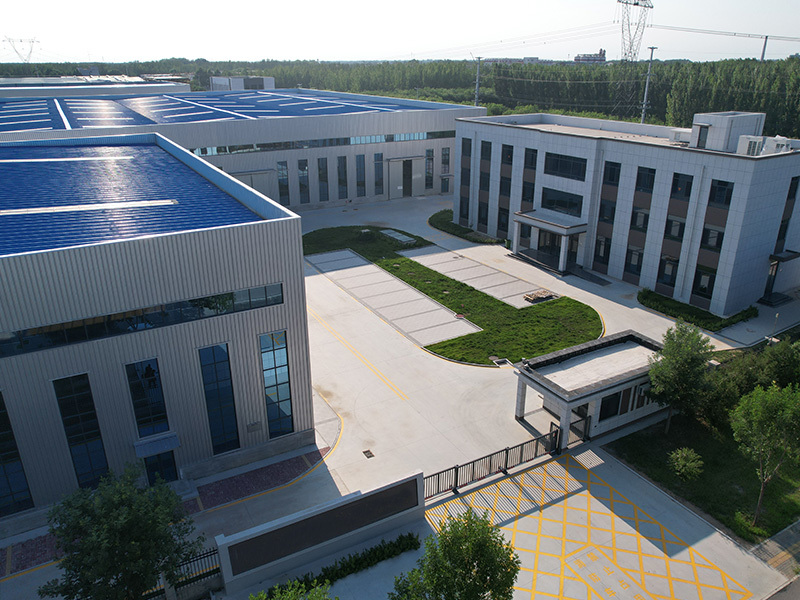
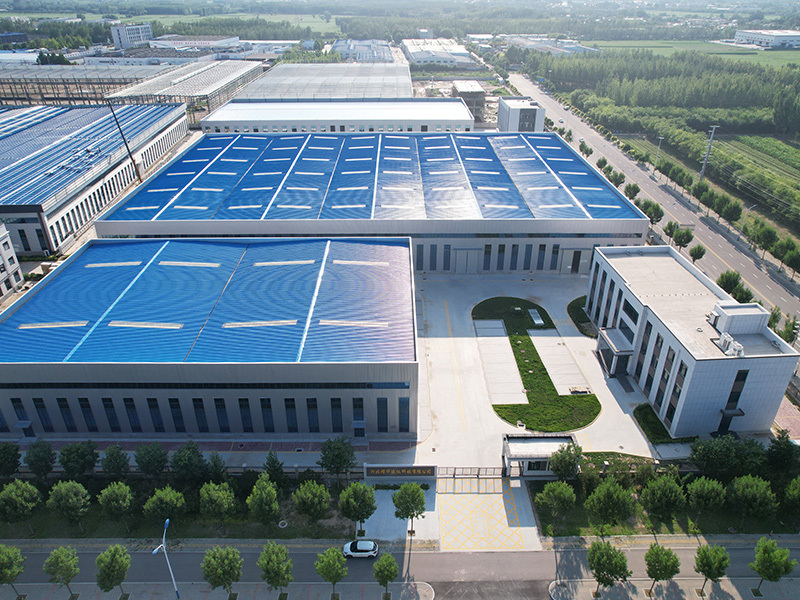
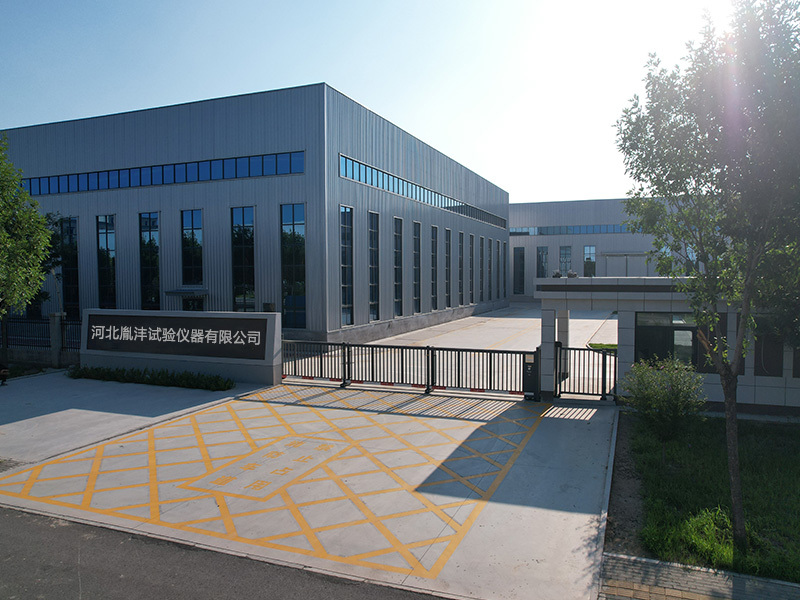
Hebei Yinfeng Experimental Instrument Co., Ltd. is a high-tech enterprise dedicated to the research and development, production, and sales of experimental instruments. The company is headquartered in Hebei Province, relying on the strong industrial foundation and technological innovation resources in the Beijing Tianjin Hebei region. It is committed to providing high-precision and high reliability testing equipment and solutions for material testing, engineering quality control, scientific research experiments and other fields.

Customized Delivery Process
We provide customers with full-process services ranging from pre-sale consultation, customized solution design, equipment installation and commissioning to after-sale technical support.
Online Communication
Provide Custom Drawings
Merchant Quotation
Sign A Contract
Processing And Production
Packaging And Distribution
Confirm Receipt Of Goods
Successful Transaction
Previous:
Flexible Foam Vacuum Water Absorption Tester
If you need customized products, Contact US !
Share to


Category
Tag list
Request a Quote
We will contact you within one working day. Please pay attention to your email.
Related Products
Content update in progress
Message
We will contact you within one business day. Please note your email address.
Fast navigation
Contact Us
Whatsapp/Tel: +86-15931715356,+86 16631790555
E-mail: qcj@cnhblabequipment.com
Add: Chengnan Industrial Zone, Xian County, Cangzhou City, Hebei Province

Online Message