



- Product Describe
-
Geotextile Effective Aperture Tester – Dry Sieving Method
1. Secure the instrument on a level, stable workbench.
2. Connect the power supply and turn on the power switch. Before starting the test, be sure to set the required time according to the test requirements: press the Set key once, and the display will start flashing; enter the desired time, using the Shift key to move the decimal point and the Adjust key to increment the digits. Once the time is set, press the Set key again to save the data, and the instrument will return to its operating state. If you then press the Start key, the timer will begin counting down and stop when the preset time is reached; pressing the Start key again will restart the timer.
3. Test procedure: Prior to testing, the standard granular material and the test specimen shall be placed together under standard atmospheric conditions for moisture equilibration.
4. Place the five test specimens in the same group flat and wrinkle-free on the support mesh sieve.
5. Select standard granular material with a finer particle size, weigh out 50 g, and then evenly spread it over the surface of the test specimen.
6. Clamp the sieve frame, test sample, and receiving pan securely to the instrument, then start the machine and shake the sieve for 10 minutes.
7. After powering off, weigh the mass of the particulate material that has passed through the test sample and record the result; then replace the sample with a new one.
8. Repeat the procedures in 3.4–3.7 using the next coarser set of standard particles, continuing until three consecutive sets of graded standard particle materials have been obtained, with one of these sets exhibiting a sieve pass rate of less than 5%.
This instrument is suitable for determining the effective aperture of all types of geotextile products, and its performance complies with the national standard GB/T 14799-2005, “Determination of Effective Aperture of Geotextiles and Related Products—Dry Sieving Method,” as specified in JTE-50. Principle: A single-layer sample of geotextile or related product, tested without tension, is used as the sieve. Under prescribed vibration frequency and amplitude, the sample and graded granular material are subjected to testing, and the sieving efficiency is calculated.
Maximum diameter of the sieve 200 millimeters Radius of gyration 12.5 millimeters Number of sieve shakes 221 times per minute Number of strikes 147 times per minute Up-and-down amplitude stroke 10 millimeters Timing Range 0–999.9 seconds Motor power 0.37KW Voltage 220V Geotextile Effective Aperture Tester – Wet Sieving Method
The TSY-2/3 Geotextile Effective Aperture Tester (wet-sieving/dry-sieving method) is used to determine the effective aperture of all types of geotextile products. It is designed and manufactured by our factory in accordance with the requirements of GB/T 17634—1998, “Determination of Effective Aperture of Geotextiles and Related Products—Wet-Sieving Method.”
Technical Specifications
Gripper inner diameter Φ130mm Vibration frequency 50Hz Vibration amplitude 1.5 mm (vibration amplitude 3 mm) Time Setting Two ranges: 0–99.99 s and 0–99 min 59 s. Matched motor 2800 r/min 550 W Power supply AC 220V ±10% 50Hz External dimensions 680×420×750mm Weight 50Kg Instrument Structural Principle
1. Appearance: The instrument consists of a base plate, an outer cover, a clamping device and sieving mechanism, a spray system, and other components.
Mounting slots are provided at the four corners of the base plate, allowing it to be secured to the foundation or workbench with bolts; the control panel in the upper-left corner of the housing is equipped with a counter, a power switch, and a start button. The housing is not in direct contact with the screening vibration unit, thereby minimizing the impact of vibration.
The spray system is mounted on the support column on the right side of the base plate and consists of an inlet, a flow switch, a metal flexible hose, and a sprinkler head. The sprinkler head is equipped with a splash-proof cover; during operation, the sprinkler head is placed inside a transparent cover, the splash-proof cover is closed, and the retaining clip is fastened to prevent water from splashing out. The collection trough is rigidly connected to the vibration head, with a collection pipe provided on the left side. The bottom of the collection trough is fitted with a supporting mesh grid, on which the test specimen is laid flat and secured firmly using clamps, then further tightened with turnbuckles and star-shaped handles.
The specific procedure for operating the toggle bolts and star-shaped handles is as follows: Due to the requirement for watertight sealing between the collection trough and the clamp, a sealing ring is installed on the outer wall of the assembly. Consequently, two of the lid-opening bolts are equipped with elongated slots; when the clamp is difficult to remove, the lid-opening bolts can be rotated in the opposite direction, causing the locking lug to lift the clamp and thereby facilitating operation.
2. Transmission System: The attached concrete vibrator drives an eccentric wheel via a belt–gear mechanism, which in turn causes the vibrating head to generate vibrations at a specified frequency and amplitude. The motor is mounted separately from the vibration assembly, and the platen is supported by four spring-mounted vibration-isolating columns connected to the base plate. The vibrating head is also connected to the platen through spring-mounted vibration-isolating columns to minimize the impact of vibration on the instrument.Work environment
1. The workbench shall be flat, stable, and exhibit excellent vibration resistance.
2. Isolate from instruments that are highly sensitive to vibration.
3. Temperature: 10–30°C; Humidity: ≤80%
4. Power supply: AC 220 V ±10%, 50 Hz
5. External water supply must be a pressure-stabilized source (recommended flow rate of 500 mL/min at 300 kPa).Method of Use for the Geotextile Effective Aperture Tester
1. Remove the clamping device, lay the test specimen flat and without any tensile force on the supporting mesh grid, then use the clamping device to secure it firmly; the specimen must be kept horizontal.
2. Uniformly spread the standard-selected granular material over the test specimen.
3. Connect a regulated water supply to the inlet, place the showerhead inside the transparent cover, secure the splash guard, fasten the clamp, and open the flow-control valve to spray water onto the test specimen.
4. Set the vibration duration on the timer (according to GB/T 17634-1998, the setting can be 600 seconds; this instrument features a two-range timing function, with adjustable ranges of 0–99.99 seconds and 0–99 minutes 59 seconds, respectively). Turn on the power and begin the test.
5. Collect the particles from the test sample as they flow out of the collection trough.
6. Once the set time has been reached, stop the instrument’s vibration.
7. Collect the failed particulate materials and test specimens.
8. Reload the sample and press the start button to reset.
9. Test results shall be processed in accordance with GB/T 17634-1998.
10. After the instrument has finished operating, turn off the power and clean the instrument.Precautions for Use
1. This instrument operates at a certain vibration frequency; the workbench must be isolated from other equipment.
2. If sand is used as the test particle, please ensure that the instrument is thoroughly cleaned.
3. After the test is completed, please thoroughly drain and remove all water and debris from the instrument.
4. Regular lubrication shall be applied to the eccentric shaft, support springs, and other moving components.Working Principle
A single-layer geotextile fabric without tension, together with its associated test specimens, is used as a sieve. Under specified vibration frequency and amplitude, the specimen and graded granular material are sprayed with water, allowing the granular material to pass through the specimen. The effective aperture of the specimen is defined as the particle size corresponding to the amount of material that passes through.
Company Profile
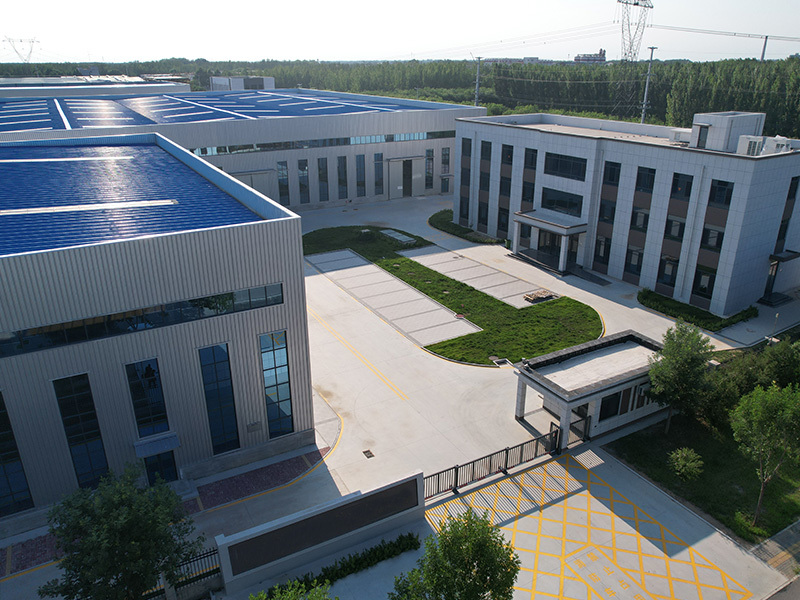
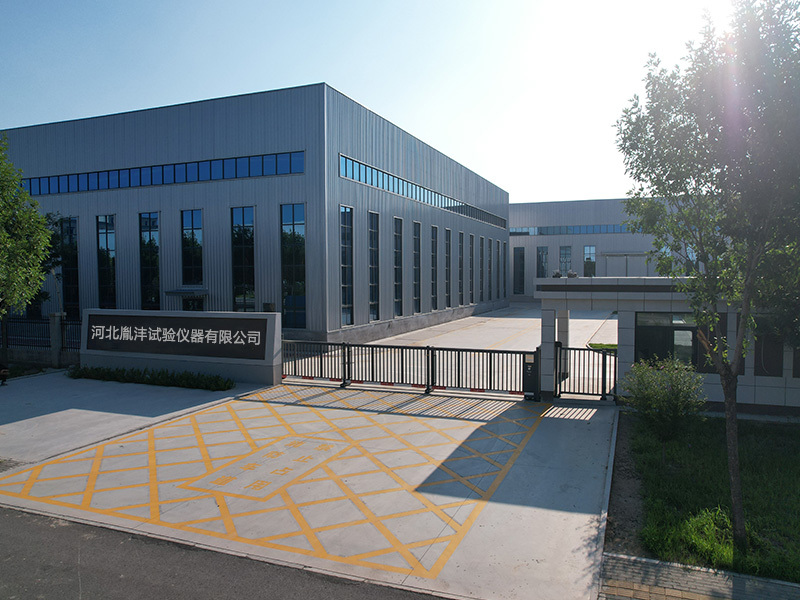
Hebei Yinfeng Experimental Instrument Co., Ltd. is a high-tech enterprise dedicated to the research and development, production, and sales of experimental instruments. The company is headquartered in Hebei Province, relying on the strong industrial foundation and technological innovation resources in the Beijing Tianjin Hebei region. It is committed to providing high-precision and high reliability testing equipment and solutions for material testing, engineering quality control, scientific research experiments and other fields.


Customized Delivery Process
We provide customers with full-process services ranging from pre-sale consultation, customized solution design, equipment installation and commissioning to after-sale technical support.
Online Communication
Provide Custom Drawings
Merchant Quotation
Sign A Contract
Processing And Production
Packaging And Distribution
Confirm Receipt Of Goods
Successful Transaction
Geotextile Effective Aperture Tester
If you need customized products, Contact US !
Share to


Category
Tag list
Request a Quote
We will contact you within one working day. Please pay attention to your email.
Related Products
Content update in progress
Message
We will contact you within one business day. Please note your email address.
Fast navigation
Contact Us
Whatsapp/Tel: +86-15931715356,+86 16631790555
E-mail: qcj@cnhblabequipment.com
Add: Chengnan Industrial Zone, Xian County, Cangzhou City, Hebei Province

Online Message