



- Product Describe
-
Overview of the Horizontal Drainage Board Water Permeability Tester
Plastic drainage boards, also known as geosynthetic drainage strips or plastic sheets, are a commonly used strip-type drainage material with a cross-sectional width of 10 cm and a thickness of approximately 5 mm. Their key quality indicators include the tensile strength of the composite structure and filter membrane, as well as the longitudinal water permeability. These products shall be manufactured in accordance with the design and manufacturing requirements specified in standards such as JTS-206-1-2009 “Plastic Drainage Boards for Water Transport Engineering,” JTGES0-2006 “Geosynthetic Materials for Highway Engineering,” SL235-2012 “Geosynthetic Materials,” and JT/T521-2004 “Geosynthetic Materials for Highway Engineering.”
This product was developed and manufactured by our factory in accordance with the requirements of the National Building Materials Administration’s Quality Inspection Center. Operational trials conducted by the center have demonstrated that the design is sound and that all performance indicators meet the specified design requirements; it is a specialized testing instrument used to measure the longitudinal water permeability of plastic drainage boards.
Technical Specifications of the Horizontal Drainage Board Water Permeability Tester
1. Specimen dimensions: 100 mm × 450 mm
2. Power supply voltage: 220V
3. Weight: 220 kg
4. External dimensions: 880 x 660 x 1150 mmWorking Principle of the Horizontal Drainage Board Water Permeability Tester
Water is supplied to the overflow tank via the water supply pump; once the water level is stabilized, the water flows into the test specimen bucket, filling the container. The pressurization system is then activated to apply pressure to the specimen bucket, with pressure control ensuring
The device is pressurized, and the pressure sensor provides a feedback signal to maintain pressure equilibrium. (Water supply can be initiated first, or pressurization can be applied first—either sequence is acceptable.)Composition of the Horizontal Drainage Board Water-Permeability Tester
Plastic drainage board water-permeability tester (see the schematic diagram of the drainage board permeability tester). It is made of stainless steel and consists of nine main components: an air-pressure chamber, a specimen cylinder, a water-supply overflow tank, an air-pressure-chamber water-supply tank, a main water-supply tank, an air compressor, an automatic pressure-control system, an electric water-supply pump, and a cabinet.
Test Procedure for the Horizontal Drainage Board Water-Permeability Tester
1. Buttons: Power: Main Power
Indicator light: Power indicator
Filling the specimen bucket with water: After the specimen is properly installed, supply water to the specimen bucket. Alternatively, pneumatic testing can be used for water supply: supply water to the overflow water tank located at the front right, and perform test water supply 2. Installing the specimen: Cut the specimen into lengths of approximately 48 cm, remove 1 cm from each end of the filter membrane, chamfer all four corners of the specimen at a 45° angle, and carefully insert the specimen into the tubular latex membrane.
Insert the drainage board together with the latex membrane into the container through the long slot of the test specimen bucket, and then discharge it from the other long slot along the support plate, ensuring that the exposed length at both ends of the flange is approximately 4 cm.
Place rubber pads over the exposed portions of the drainage board, ensuring that the pads tightly adhere to the outer surface of the flange. Then fold the latex membrane over and wrap it around the rubber pads. Next, fit two additional aluminum shims (each with a rubber pad) over the remaining exposed sections of the drainage board, with the rubber side facing outward on both the left and right sides, so that the folded-over portion of the latex membrane is sandwiched between the rubber pads. The filter membrane of the drainage board should extend beyond the edges of the rubber pads.
Secure the inflow balancing tank and the overflow balancing tank to the working vessel using four screws, tightening them evenly.
3. Pressure Setting: After powering on, press the Set key; then use the Up and Down keys to adjust the pressure value, and the Left and Right keys to toggle between display modes. Once the settings are configured, press the Set key again to save and return to the test interface. Finally, select the Automatic mode to initiate the pressurization and pressure-control test.
4. Water Supply: Open the test water supply valve to allow water to flow into the overflow tank. Once the overflow tank is full, the water level will be maintained at a constant level to supply water to the specimen cylinder. Timing for the permeability test may commence only after water begins to discharge from the left-side outlet. The water intake port is located below the outlet; the flexible hose may be removed. Due to deformation of the drainage board, the pressure will decrease; therefore, pressure must be continuously replenished until it stabilizes. The duration of this process depends on the core strip strength and filter membrane strength of the drainage board and typically ranges from 0.5 to 2 hours.
5. Testing the discharge capacity: The water level difference between the overflow weir of the overflow tank and the overflow weir at the outlet opening shall be exactly 20 cm, corresponding to a hydraulic gradient of 0.5; verify that the pressure is 350 kPa. Once all conditions are met, use a graduated cylinder positioned directly beneath the overflow opening to measure the discharge capacity and record the water temperature. Repeat the discharge measurement after 6 hours; when the relative error between the two measurements is less than 2%, adopt the latter measurement as the verified discharge capacity for this drainage board.
Each test group consists of two drainage boards, and the average flow rate of the two boards is taken as the representative value for the group’s drainage capacity.
Maintenance of the Control System for the Horizontal Drainage Board Water-Permeability Tester
1. Regularly inspect the connection cables on the controller’s rear panel to ensure good contact; if any connections are loose, tighten them promptly.
2. After the test, if the machine will not be used for an extended period, turn off the controller.
3. The interfaces on the controller are designed for one-to-one correspondence; inserting a cable into the wrong interface may damage the equipment. 4. When plugging or unplugging cables from the controller’s interfaces, the controller must be powered off.
5. After the test is completed, drain all the water and apply some rust-preventive oil or similar lubricant.
Company Profile
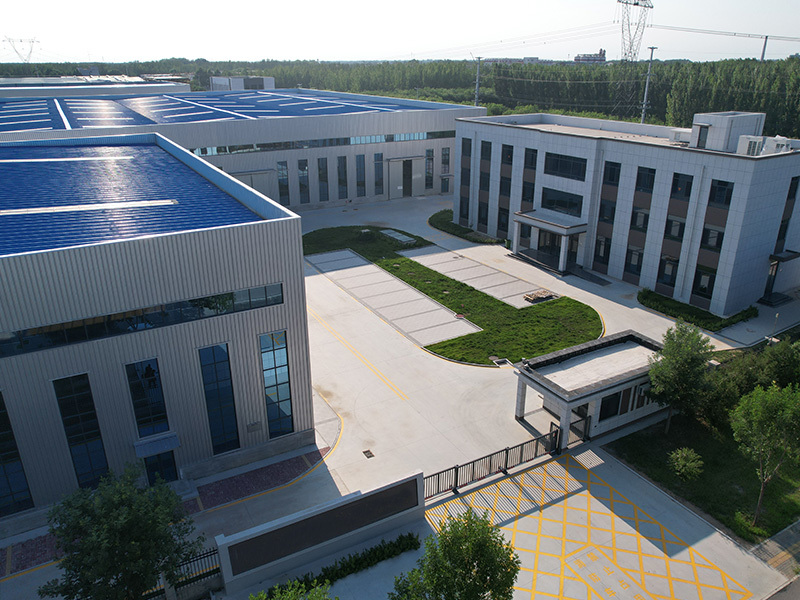
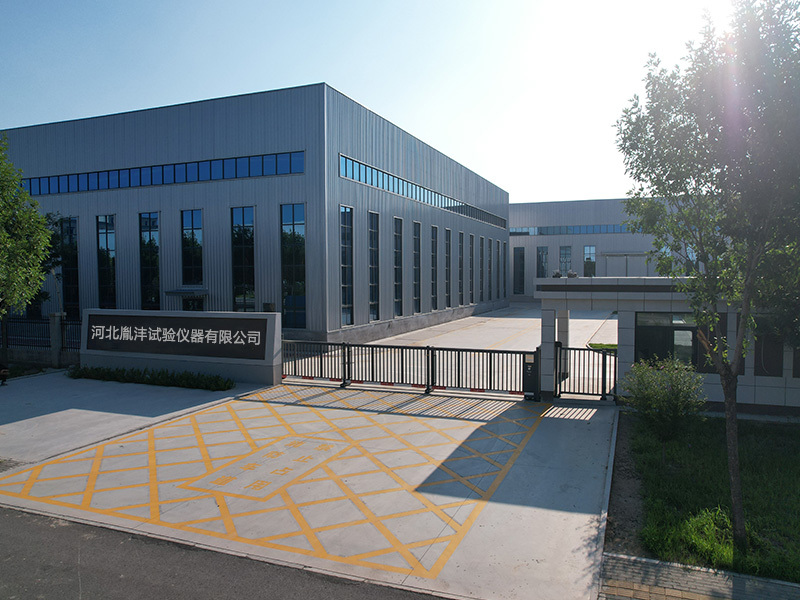
Hebei Yinfeng Experimental Instrument Co., Ltd. is a high-tech enterprise dedicated to the research and development, production, and sales of experimental instruments. The company is headquartered in Hebei Province, relying on the strong industrial foundation and technological innovation resources in the Beijing Tianjin Hebei region. It is committed to providing high-precision and high reliability testing equipment and solutions for material testing, engineering quality control, scientific research experiments and other fields.


Customized Delivery Process
We provide customers with full-process services ranging from pre-sale consultation, customized solution design, equipment installation and commissioning to after-sale technical support.
Online Communication
Provide Custom Drawings
Merchant Quotation
Sign A Contract
Processing And Production
Packaging And Distribution
Confirm Receipt Of Goods
Successful Transaction
Previous:
Drainage Board Water Permeability Tester (Horizontal Type)
If you need customized products, Contact US !
Share to


Category
Tag list
Request a Quote
We will contact you within one working day. Please pay attention to your email.
Related Products
Content update in progress
Message
We will contact you within one business day. Please note your email address.
Fast navigation
Contact Us
Whatsapp/Tel: +86-15931715356,+86 16631790555
E-mail: qcj@cnhblabequipment.com
Add: Chengnan Industrial Zone, Xian County, Cangzhou City, Hebei Province

Online Message