



- Product Describe
-
Hydraulic and Hydroelectric Engineering Trial Pit Double-Ring Infiltration Test Device
Double-ring method for measuring field permeability系数
I. Purpose and Significance of the Experiment
The double-ring test is a commonly used, simple method for determining the hydraulic conductivity of unsaturated, loose rock layers in the vadose zone under field conditions. The results obtained from this test more closely reflect actual conditions. It is highly important to utilize the data from this test to study regional water balances as well as leakage volumes from reservoirs, irrigation districts, and canals.
II. Experimental Methods
For field determination of the hydraulic conductivity of unsaturated, loose rock layers in the vadose zone, the pit test method, the single-ring method, and the double-ring method are commonly used. Among these, the double-ring method offers higher accuracy.
III. Experimental Principle
Within certain hydrogeological boundaries, water is injected into the loose surface rock layers until the infiltration rate stabilizes—meaning that the amount of water infiltrating per unit time becomes approximately constant. Then, using the principle of Darcy’s law, the permeability coefficient (K) is determined.
Two iron rings, each approximately 20 cm high and with diameters of 0.25 m and 0.5 m respectively, were embedded at the bottom of the pit. During the experiment, water was simultaneously injected into both the inner and outer rings, maintaining the water columns in both rings at the same height—ideally around 0.1 m. Due to the confining effect of the outer ring’s permeability field, the water in the inner ring could only seep vertically, thereby eliminating any errors caused by lateral seepage.
This method has higher accuracy than both the pit test method and the single-ring method.

IV. Experimental Instruments
Double ring, shovel, ruler, bucket, tape, rubber hose
V. Experimental Procedure
(1) Select a test site; it is preferable to choose a location where the groundwater burial depth exceeds 5 meters. If the groundwater burial depth is less than 2 meters, the permeability coefficient obtained through the seepage test will not be accurate due to the excessively short seepage path, so the seepage test should not be conducted.
(2) Install the test apparatus according to the schematic diagram of the double-ring infiltration test.
(3) Fill the inner and outer iron rings with water, ensuring that the water columns in both the inner and outer rings remain at the same height—ideally around 0.1 meters.
(4) Observe the amount of infiltrated water at regular intervals. At the beginning, since the infiltration rate is high, the observation intervals should be short. Later on, you can switch to regular intervals—for example, observing every 10 minutes—until the infiltration rate per unit time reaches relative stability. Then, continue the test for another 2 to 4 hours before concluding it.
VI. Precautions
(1) At all times, maintain the water columns in both the inner and outer rings at the same height of 0.1 m.
(2) When filling the water bottle, be sure to perform the conversion for accurate water volume measurement.
7. Experimental Results
(1) The recording format for field infiltration tests is shown in Table 1.
Table 1: Field Infiltration Test Records
Project Name Tester
Project Number Calculator
Test Date Checker
Number of trials Elapsed time
(s)
Permeation flow
m 3/min
Penetration rate
m/min
Permeability coefficient
m/min
Note: A – Area of the inner diameter of the double ring (314 cm²) 2 ) I is the hydraulic gradient,
(2) Calculate the permeability coefficient
According to Darcy's law: k = Q/AI
In the formula, Q represents the steady-state seepage flow rate (m³/s). 3 /min);
K – Permeability coefficient (m/min);
A – Area of the inner diameter of the double ring (m²) 2 );
Z – Thickness of the water layer in the seepage pit (m);
L—The depth (m) to which water infiltrates from the bottom of the test pit into the soil layer during the test period;
H k —The capillary pressure generated when water penetrates dry soil is expressed as the height of a water column (in meters);
The L value can be determined by taking samples with a hand drill after the test and measuring the changes in their moisture content. H k Determined according to Table 2. If the test layer is coarse sand or coarse sand gravel, and the thickness of the water layer in the test pit is 10 cm, then H k Compared to Z and L, it is very small; I is approximately equal to 1, therefore...
K = Q/A = V (permeation rate)
If the test layer is a cohesive soil, it can be calculated according to H. k The actual value is substituted into the formula and calculated. I The permeability coefficient (K) is then obtained by reusing the value.
Table 2. Capillary Pressure H for Different Lithologies k Table
Rock name H k (m) Rock name H k (m) Heavy clay
Light subclay
Heavy subsoil
Lightly sub-sandy soil
≈1.0
0.8
0.6
0.4
Fine-grained clayey sand
Silt
Fine sand
Medium sand
0.3
0.2
0.1
0.05
(3) Outcomes
① Draw a plan view of the test pit location;
② Calculate the permeability coefficient.
To understand how the seepage flow rate and seepage velocity change over time during the seepage test, plot time-history curves of the seepage flow rate and seepage velocity.
Company Profile
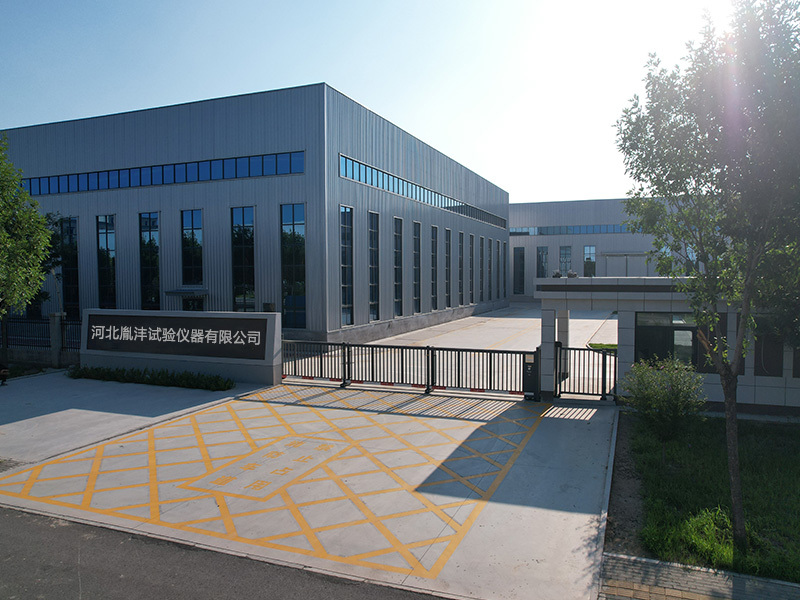
Hebei Yinfeng Experimental Instrument Co., Ltd. is a high-tech enterprise dedicated to the research and development, production, and sales of experimental instruments. The company is headquartered in Hebei Province, relying on the strong industrial foundation and technological innovation resources in the Beijing Tianjin Hebei region. It is committed to providing high-precision and high reliability testing equipment and solutions for material testing, engineering quality control, scientific research experiments and other fields.



Customized Delivery Process
We provide customers with full-process services ranging from pre-sale consultation, customized solution design, equipment installation and commissioning to after-sale technical support.
Online Communication
Provide Custom Drawings
Merchant Quotation
Sign A Contract
Processing And Production
Packaging And Distribution
Confirm Receipt Of Goods
Successful Transaction
Test Pit Double-Ring Infiltration Test Apparatus
If you need customized products, Contact US !
Share to


Category
Tag list
Request a Quote
We will contact you within one working day. Please pay attention to your email.
Related Products
Content update in progress
Message
We will contact you within one business day. Please note your email address.
Fast navigation
Contact Us
Whatsapp/Tel: +86-15931715356,+86 16631790555
E-mail: qcj@cnhblabequipment.com
Add: Chengnan Industrial Zone, Xian County, Cangzhou City, Hebei Province

Online Message