



- Product Describe
-
Product Introduction: CA-3 Gas Content Tester
I. CA-3 The concrete air-entrainment meter is used to determine the air content of concrete mixes and is suitable for concretes with aggregate maximum size not exceeding 40 mm, air content not exceeding 10%, and a defined slump. This instrument features simple operation, high measurement accuracy, and intuitive readings, making it an advanced device for determining the air content of concrete mixes. The testing method employed by the concrete air-entrainment meter complies with the relevant provisions of GBJ 80–85 (Test Methods for Properties of Ordinary Concrete Mixes) regarding air-content tests for concrete mixes.
II. Parameters
1. Volume of the measuring bowl: 7 liters (with an inner diameter equal to its depth)
2. Air content range: ≤10%
3. Maximum nominal size of coarse aggregate: ≤40 mm
4. Weight: 13 kg
5. Operating pressure: 0.1 MPa
III. Determination of Air Content in Concrete Mix
1. Wipe the inner surfaces of the measuring bowl and its lid clean with a damp cloth, and ensure the measuring bowl is placed horizontally.
2. Evenly place the freshly mixed concrete into the measuring vessel, ensuring that the concrete level slightly exceeds the rim of the vessel. During filling, use a tamping rod to lightly tamp the concrete. Once filling is complete, if a vibrating table (with a frequency of 50 Hz and an no-load amplitude of 0.5 ± 0.1 mm) is used for vibration, add more concrete as needed during vibration if the concrete surface sinks below the inner rim. Continue vibrating until the concrete surface becomes smooth and glossy, at which point vibration should be stopped. If a vibrating table is not used and a tamping rod is employed instead, divide the concrete into three layers, tamping each layer to approximately one-third of the vessel’s height; when tamping each layer, ensure the tamping rod penetrates the full depth. When tamping the upper layer, insert the rod 10–20 mm into the lower layer. After tamping each layer, place the tamping rod under the bottom of the measuring vessel and alternately tap the vessel against the ground 15 times on each side.
3. Upon completion of tamping, the excess concrete mix on the surface shall be immediately scraped off using a screed; any depressions on the surface shall be filled in, followed by leveling with a trowel to achieve a smooth, bubble-free finish.
4. Wipe clean the edges of the measuring bowl and its lid, place the O-ring rubber seal (238 × 8.6) into the groove on the lid’s edge, secure the lid with clamps to ensure an airtight seal, and use a level to verify that the assembly is perfectly horizontal.
5. Open the faucet and the vent valve, then use the water-filling device to fill the measuring bowl through the small faucet until water begins to flow out of the vent valve; subsequently, tightly close both the small faucet and the vent valve.
6. Close all valves, then use a pump to pressurize the system until the gauge reading is slightly above 0.1 MPa. Note: (1) Whenever taking a pressure reading, gently tap the dial with your fingertip and wait for the pointer to come to rest before recording the value. (2) The 0.1 MPa pressure line represents the instrument’s initial pressure setting, and 0.1 MPa is the instrument’s initial pressure.
7. Press the valve stem 2–3 times, then gently tap the sides of the measuring bowl with a wooden mallet to ensure uniform pressure distribution throughout the sample. Press the valve stem again; once the pressure gauge pointer has stabilized, record the pressure reading. Using the instrument’s calibration curve that relates air content to pressure gauge readings, determine the instrument-measured air content A for the concrete mix sample being tested.
After the test is completed:
1. Open the air-release valve to vent air from the measuring bowl. If the air content of the same sample needs to be determined repeatedly, repeat steps 5–7 above.
2. Open the small faucet, release the clamp, and remove the bowl lid.
3. Empty the concrete mix sample from the measuring bowl and clean the inner surfaces of the bowl lid and the measuring bowl.
4. If the air content meter is not in continuous use, the fine-adjustment valve must be opened to vent the air, thereby equalizing the pressure in the gas chamber with atmospheric pressure.
Concrete Air Content Tester, Direct-Reading Concrete Air Content Tester, Japan-Visit Air Content Tester
Note: During operation, if the air chamber pressure has been completely vented through the fine-adjustment valve but pressure still remains in the measuring bowl, under no circumstances should the valve stem be pressed down. Otherwise, water may be drawn into the air chamber, leading to errors in subsequent tests.
IV. Measurement of Concrete Mix
1. Prior to determining the air content of concrete mixtures, the air content of the aggregates shall first be measured using the following procedure. Based on the measurement results, calculate the weights of coarse and fine aggregates in each test specimen. The formula is as follows: WG and WS represent the weights of coarse and fine aggregates in each specimen (kg), respectively; V denotes the capacity of the air-content meter’s measuring bowl (in liters); and Gg and Cs represent the dosages of coarse and fine aggregates per cubic meter of concrete (kg), respectively.
2. First, fill the measuring bowl with water to one-third of its height. Thoroughly mix the weighed coarse and fine aggregates, then slowly pour them into the bowl. When adding the test sample, minimize the entrainment of air as much as possible. For every 20–30 mm rise in the water level, gently tamp the mixture 10 times and give it a brief stir; at the same time, lightly tap the measuring bowl to eliminate any trapped air. Throughout the filling process, ensure that the water surface remains above the top of the aggregate. After all the aggregate has been added, allow it to soak for an additional five minutes, gently tapping the wall of the measuring bowl to release any remaining air bubbles. Finally, remove any surface foam and top up the water to the brim.
3. Wipe clean the edges of the measuring bowl and the bowl lid, place the O-ring rubber seal (230 × 8.6) into the groove on the edge of the bowl lid, close the bowl lid, secure it with clamps to ensure a tight air seal, and use a level to verify that the assembly is horizontal. Proceed with the remaining steps in accordance with the relevant provisions for determining the air content of concrete mixtures to obtain the air content of the coarse aggregate, C.
V. Calculation of Test Results for the Concrete Air Content Tester
The air content is calculated using the following formula:
A=A1-C
Where: A – Volume of concrete mix (%)
A1—Instrumental Determination of Air Content (%)
C-Aggregate Air Content (%)
The average of the two measurements shall be taken as the test result. If the difference between the two air-content measurements exceeds 0.2%, the cause must be identified and the test repeated.
Concrete Air Content Tester, Direct-Reading Concrete Air Content Tester, Japan-Visit Air Content Tester
VI. Each instrument is precisely calibrated before leaving the factory, and calibration results are provided; however, periodic re-calibration is also advisable to ensure the accuracy of air-entrainment measurements in concrete mixes. The calibration procedure comprises the following three steps:
1. Calibration of the volumetric bowl’s capacity
a. Prepare a flat glass plate and weigh it together with the empty measuring bowl to obtain W2 (accurate to 0.05 kg);
b. Fill the container with water, then slide a glass plate along the upper edge, periodically adding water with a burette to ensure that the measuring bowl is completely filled and no air bubbles remain beneath the glass plate. Weigh the water-filled measuring bowl together with the glass plate to obtain the weight W1 (accurate to 0.05 kg); the volume V of the measuring bowl is then:
W = W1 - W2 (W, W1, W2 in kg)
V = W1 - W2 (W, W1, W2 in kg)
V = W/r (V-L)
r- Specific gravity of water at the calibration temperature (r kg/L)
2. Calibration at 0% air content.
a. Fill the measuring bowl completely with water, and connect calibration tube 2 to the end of the small tap on the underside of the bowl lid.
b. Open the small tap, gently place the bowl cover on the measuring bowl, secure it with the clamp, and use a level to check that the instrument is horizontal.
C. Open the vent valve, then use a water-filling device to add water through the small tap until water begins to flow from the vent valve outlet; subsequently close both the small tap and the vent valve. Note: The space beneath the pot lid must be completely filled with water; otherwise, the measured value will not accurately reflect the air content.
d. Use an air pump to pressurize the system until the gauge pressure slightly exceeds 0.1 MPa; hold for 5 seconds, then adjust the pressure using the fine-tuning valve to precisely set the gauge pressure at 0.1 MPa. Gently tap the dial; if the gauge pressure remains at 0.1 MPa, press the valve stem 2–3 times to equalize the pressure in the gas chamber with that in the measuring bowl. The pressure reading at this point corresponds to an air content of 0%.
3. Calibration of the air-entrainment meter with a scale ranging from 1% to 10%: After calibrating the meter at 0% air content, connect calibration tube 1 to the upper end of the small tap on the hopper lid, and use calibration tube 1 to draw water from the measuring hopper into the graduated cylinder. The specific operating procedure is as follows:
a. Press down on the valve stem and slowly open the small tap; water from the measuring bowl will then flow through calibrated tube 1 into the graduated cylinder. If the flow is obstructed, first close the small tap.
b. Open the vent valve to equalize the pressure inside the measuring bowl with atmospheric pressure, then close the vent valve. Use a pressure pump to increase the pressure until the gauge pressure exceeds 0.1 MPa by a small margin, and hold for 5 seconds.
C. Use the fine-adjustment valve to set the pressure so that the gauge reading accurately stabilizes at 0.1 MPa; hold this setting for 5 seconds, then press the valve stem 2–3 times. After the pointer has stabilized, record the pressure reading, which corresponds to an air content of 1%. Repeat the procedure to obtain gauge readings for air contents of 2%, 3%, 4%, ..., and 10%.
d. Perform two calibrations strictly in the prescribed sequence. For each calibration point corresponding to air content levels of 0%, 1%, ..., and 10%, record the two pressure gauge readings and calculate their arithmetic mean. Plot the relationship between air content and pressure, with the average pressure on the horizontal axis and the air content on the vertical axis; this relationship should conform to Boyle’s law (p1v1 = p2v2). If any significant deviation is observed, identify the cause and repeat the calibration.
CA-6 Digital Direct-Reading Concrete Air Content Tester
Scope of Application
This testing apparatus is suitable for cement concrete with aggregate sizes not exceeding 40 mm, air content not exceeding 10%, and a slump.Instrument Features
This testing instrument complies with the provisions of T0526-2005, “Test Method for Air Content of Cement Concrete Mixtures,” in the People’s Republic of China’s “Code for Testing of Cement and Cement Concrete in Highway Engineering.” It incorporates advanced digital control technology and high-precision sensors, thereby eliminating the visual parallax error inherent in dial-type gauges. The air content value is read directly, eliminating the need to consult calibration charts. The instrument consists of a measuring bowl and a bowl cover, both manufactured from high-quality stainless aluminum, which offers excellent corrosion resistance, an aesthetically pleasing appearance, and ease of operation.
Technical Specifications: Power Supply: DC 6V (built-in 4 AA batteries)
Sensor: calibrated pressure 0.1 MPa
Air content: 0%–10%
The power supply can operate continuously for more than 8 hours.Operation and Use of Instruments
After unpacking, turn on the power switch (located directly above the instrument) to start operation. At this point, the first display line will show an air content percentage of 00.0, and the second line will display a real-time air pressure of 0.000. Next, secure the compacted concrete metering bowl and its top cover using the clamps, open the water-injection valve and the vent valve, and then fill the bowl with water through calibration tube 1 until water begins to overflow from the vent valve and no more air bubbles are produced. At this point, close the water-injection valve and the vent valve, use the hand pump to increase the pressure to 0.1 MPa; if the pressure exceeds 0.1 MPa, adjust it to exactly 0.1 MPa using the fine-adjustment valve. Once pressurization is complete, press the valve stem 1–2 times until the pressure reading stabilizes and remains constant, then record the air content percentage.Instrument calibration
Press and hold the △ key to power on for 3 seconds, then release. The first line will display “————.” When the pressure is increased from 0 to 0.1000 MPa, press the zero key to complete calibration. At this point, the pressure reading should be approximately 0.100 MPa. If the deviation is too large, recalibration is required. (This procedure must be performed by the metrology department, which connects the sensor to a standard pressure source; users are not permitted to perform calibration themselves.)
Calibration of air content values:
(1) Fill the measuring bowl with water, eliminate air bubbles from the inner wall, secure the top cover with the clamp, open the water-inlet valve and the vent-drain valve, then inject water into the measuring bowl through the inlet valve pipe until no more air bubbles emerge from the drain valve. Finally, close both the water-inlet valve and the drain valve.
(2) Press and hold the power button for 3 seconds, then release to enter the calibration procedure. Close the fine-adjustment valve, use the hand pump to increase the pressure to 0.1 MPa, and operate the control valve stem 1–2 times; at this point, the pressure reading corresponds to an air content of 0%. Once the digital display stabilizes, press the “Zero” key to set the zero point. The air-content window will then display “—1,” indicating that the calibration has entered the 1% air-content setting. Place the graduated cylinder beneath the water-injection pipe, dispense 70 mL (1%) of water into the cylinder, then close the water-injection valve. Open the vent-and-drain valve to equalize the pressure in the measuring chamber with atmospheric pressure, then close the vent-and-drain valve. Increase the pressure in the air chamber to 0.1 MPa, operate the control valve several times to observe the pressure reading, and once the value stabilizes, press the “Zero” key to set the 1% reference point; the air-content display will then show “—2.” Proceed in the same manner to calibrate the air-content values at 2%, 3%, ..., up to 10%.
Note: 1. During the calibration process, after each 70 mL of water has been dispensed, the vent and drain valve must be opened to equalize the pressure with atmospheric pressure.
2. When the instrument display is blank, press the switch on the dial to restore normal operation.
Special Note: (1) This instrument is a precision device; users must take care to protect it. The pressure and gas content readings are pre-calibrated at the factory, so users are advised not to recalibrate them independently to avoid disrupting the instrument’s software.
(2) The air content meter is covered by a 12-month warranty from the date of sale. After the warranty period expires, our factory can provide paid maintenance services. Damage to the instrument caused by human error is not covered under the warranty. If any quality issues arise, please contact your dealer.The HC-7L new-standard concrete air-content meter is independently developed and manufactured in accordance with GB/T 50080-2002, “Test Methods for Properties of Ordinary Concrete Mixtures,” and is used to measure the air content in concrete mixes.
Concrete can be divided into two constituent components: coarse aggregate and mortar. The particle size of the coarse aggregate has virtually no direct effect on the air content; the entrained air bubbles are distributed within the fine particles of the concrete, i.e., the mortar, and their characteristics, in turn, determine the overall performance of the concrete.
Main Technical Parameters
Volume 7L Air content range ≤10% Larger nominal size of coarse aggregate ≤40mm Smaller reading 0.1% Design for higher pressure 4MPa Higher work pressure 0.4MPa Air-tightness test pressure 0.4MPa Weight 11KG Calibration of the concrete air content meter:
1. Wipe the inner surfaces of the measuring bowl and its lid clean with a damp cloth, and ensure the measuring bowl is placed horizontally.
2. Evenly place the freshly mixed concrete into the measuring vessel, ensuring that the concrete level slightly exceeds the rim of the vessel. During filling, a tamping rod may be used to gently tamp the concrete. Once filling is complete, if a vibrating table (with a frequency of 50 Hz and an no-load amplitude of 0.5 ± 0.1 mm) is employed for vibration, any settlement of the concrete during vibration that causes the surface to drop below the inner opening must be promptly corrected by adding more concrete mix. Vibration should continue until the concrete surface becomes smooth and exhibits a glazed appearance, at which point vibration shall be stopped. If a vibrating table is not used and a tamping rod is employed instead, the concrete mix shall be placed in three layers, with each layer being compacted to approximately one-third of the height of the measuring vessel. When tamping each layer, the tamping rod shall penetrate the full depth of the layer. When tamping the upper layer, the tamping rod shall be inserted 10–20 mm into the lower layer. After compaction of each layer, the tamping rod may be placed at the bottom of the measuring vessel, and the vessel should then be alternately tapped against the ground on its left and right sides a total of 15 times.
3. Upon completion of tamping, immediately use a screed to remove any excess concrete mix from the surface; fill any depressions and then smooth the surface with a trowel, ensuring it is smooth and free of air bubbles.
4. Wipe clean the edges of the measuring bowl and its lid, place the O-ring rubber seal (238 × 8.6) into the groove on the lid’s edge, close the lid, secure it with clamps to ensure an airtight seal, and use a level to verify that the assembly is horizontal.
5. Open the faucet and the vent valve, then use the water-filling device to fill the measuring bowl through the small faucet until water begins to flow out of the vent valve; subsequently, tightly close both the small faucet and the vent valve. 6. Close all valves, then use a hand pump to pressurize the system until the gauge pressure slightly exceeds 0.1 MPa. Note: 1. Each time you read the pressure, gently tap the dial with your fingertip and wait for the pointer to stop swinging before taking the reading. 2. The 0.1 MPa pressure line represents the instrument’s initial pressure setting, and 0.1 MPa is the instrument’s initial pressure.
7. Press the valve stem 2–3 times, then gently tap the sides of the measuring bowl with a wooden mallet to ensure uniform pressure distribution throughout the sample. Press the valve stem again; once the pressure gauge pointer has stabilized, record the pressure reading. Using the instrument’s calibration curve that relates air content to pressure gauge readings, determine the instrument-measured air content A for the concrete mix sample being tested. After the test is completed,
1. Open the air-release valve to vent air from the measuring bowl. If it is necessary to repeat the air-content measurement on the same sample, repeat steps 5–7 above.
2. Open the small faucet, release the clamp, and remove the bowl lid.
3. Empty the concrete mix sample from the measuring bowl and clean the bowl lid and the inner surface of the measuring bowl.
4. If the Yaxing gas content meter is not used continuously, the fine-adjustment valve must be opened to vent the air, so that the pressure in the gas chamber equals atmospheric pressure. Note: During operation, if the pressure in the gas chamber has been completely relieved through the fine-adjustment valve but there is still pressure in the measuring bowl, the valve stem must never be pressed down; otherwise water will be drawn into the gas chamber, leading to errors in subsequent tests.
Instructions for use:
a. Evenly place the concrete mix into the mold, then vibrate and consolidate it for 15–30 seconds. b. Smooth the concrete surface to ensure it is even and free of air bubbles.
c. Close the bowl lid, fill the measuring bowl with water until it flows out of the outlet, then tightly close the tap and the vent valve.
d. Pressurize the vector pot to a gauge pressure exceeding 0.1 MPa, adjusting with the fine-tuning valve to an accuracy of 0.1 MPa.
e. Press the valve stem 1–2 times, record the pressure gauge reading, and determine the air content value A1 using the calibration curve.
f. Determine the air content C of the aggregate using the water-pressure method.
g. Result calculation: A = A1 - C
The result shall be the average of two measurements; if the difference between the two measurements exceeds 0.2%, the cause must be identified and the test repeated [1]. 6. Calibration Procedure for Air Content: Technical Parameters of the Concrete Air Content Tester Volumetric capacity of the measuring bowl: 7 liters (with inner diameter equal to depth) Air content measurement range: ≤10% Maximum nominal size of coarse aggregate: ≤40 mm
Precautions for Use:
1. When using a concrete air-entrainment meter, carefully read the technical manual to familiarize yourself with the technical specifications, operational performance, methods of use, and precautions, and strictly follow the prescribed procedures outlined in the instrument’s user manual.
2. Personnel using a concrete air-entrainment meter for the first time must operate under the guidance of experienced personnel and may only perform independent operations once they have attained proficiency.
3. The concrete air-entrainment meter used during the experiment shall be arranged in a rational layout, neatly positioned, and easily accessible for operation, observation, and recording.
Company Profile
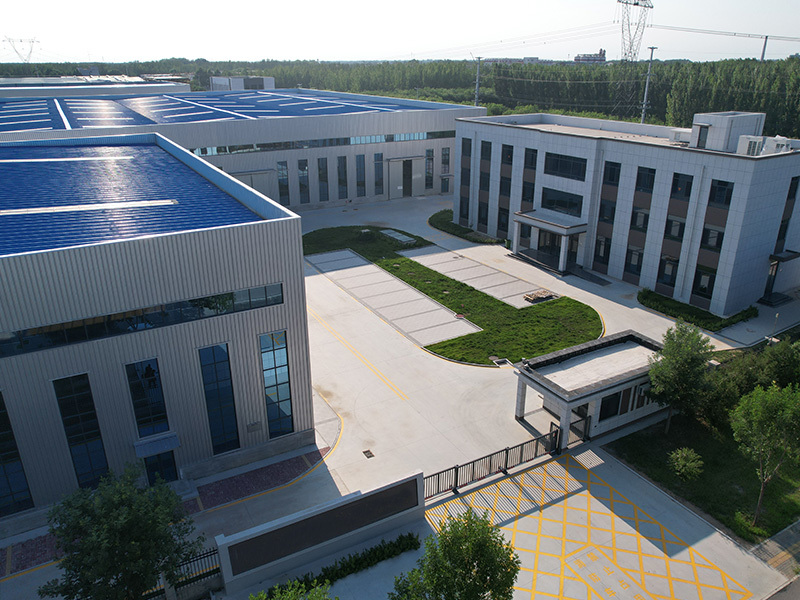
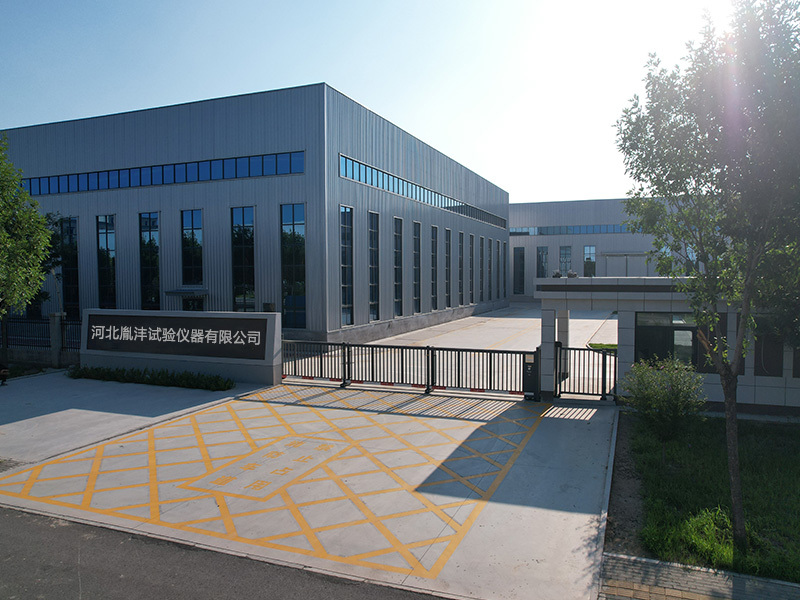
Hebei Yinfeng Experimental Instrument Co., Ltd. is a high-tech enterprise dedicated to the research and development, production, and sales of experimental instruments. The company is headquartered in Hebei Province, relying on the strong industrial foundation and technological innovation resources in the Beijing Tianjin Hebei region. It is committed to providing high-precision and high reliability testing equipment and solutions for material testing, engineering quality control, scientific research experiments and other fields.


Customized Delivery Process
We provide customers with full-process services ranging from pre-sale consultation, customized solution design, equipment installation and commissioning to after-sale technical support.
Online Communication
Provide Custom Drawings
Merchant Quotation
Sign A Contract
Processing And Production
Packaging And Distribution
Confirm Receipt Of Goods
Successful Transaction
Previous:
Next:
Direct-Reading Concrete Air Content Meter
If you need customized products, Contact US !
Share to


Category
Tag list
Request a Quote
We will contact you within one working day. Please pay attention to your email.
Related Products
Content update in progress
Message
We will contact you within one business day. Please note your email address.
Fast navigation
Contact Us
Whatsapp/Tel: +86-15931715356,+86 16631790555
E-mail: qcj@cnhblabequipment.com
Add: Chengnan Industrial Zone, Xian County, Cangzhou City, Hebei Province

Online Message